
I Built Linguo from The Simpsons as a Real AI Robot
In the show, Linguo is the grammar robot Lisa Simpson builds for the school science fair. His job is simple: listen to people and correct their language mistakes.
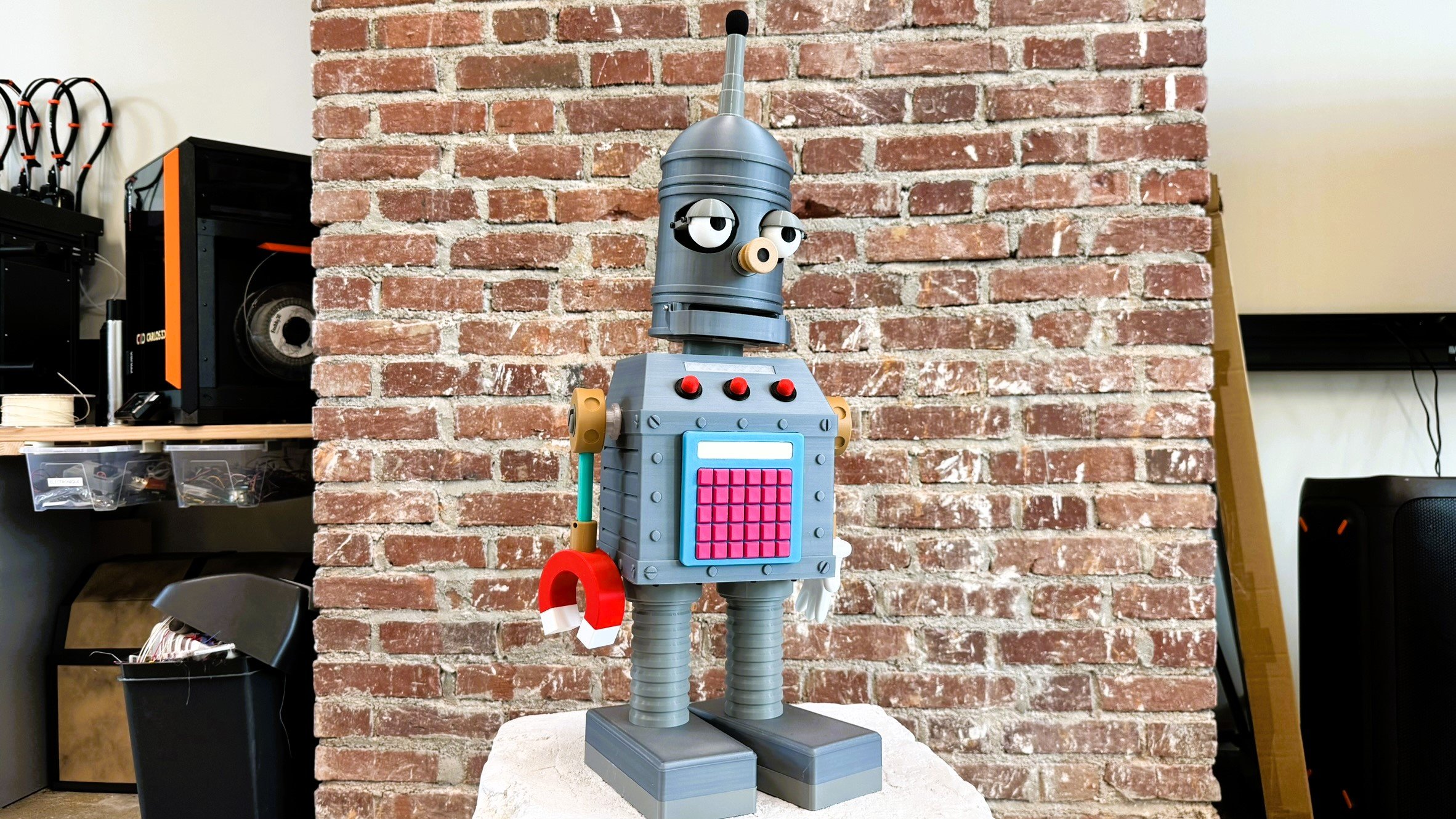
So I wanted to try something a little ridiculous: Could I turn this cartoon robot into a real working robot that moves, talks, listens, and corrects my English?
As a 3D printing and robotics project, this was one of the most complex builds I’ve made so far. It combined 3D modeling, 3D printing, mechanical design, electronics, Raspberry Pi, servos, and AI programming.
And since English is not my native language… building a robot that corrects my English actually felt a little dangerous.
Watch the full Linguo build 👇
In the video, I show the complete process: designing Linguo, printing the parts, building the eye and jaw mechanisms, wiring the electronics, connecting everything to AI, and finally testing if Linguo can actually correct me.
Why I chose Linguo 🤖

I’ve been building real versions of objects, inventions, and moments from The Simpsons, and Linguo felt like the perfect next challenge.
At first, he looks like a simple cartoon robot. But once I started thinking about how to make him real, the project became much more complicated.
He couldn’t just look like Linguo.
He needed to:
move his eyes and eyelids
open and close his mouth
move his head
listen to my voice
understand what I said
answer with a correction
and somehow fit all the electronics inside a small robot body
That’s when I realized this was not just a 3D printed prop. It had to become a real AI-powered robot.e.
Turning a cartoon robot into a 3D model
The first challenge was turning a 2D cartoon design into a real 3D printable object.
Cartoon objects are tricky because they are not designed to exist in the real world. The proportions change from one shot to another, and some shapes only work because they are drawn.
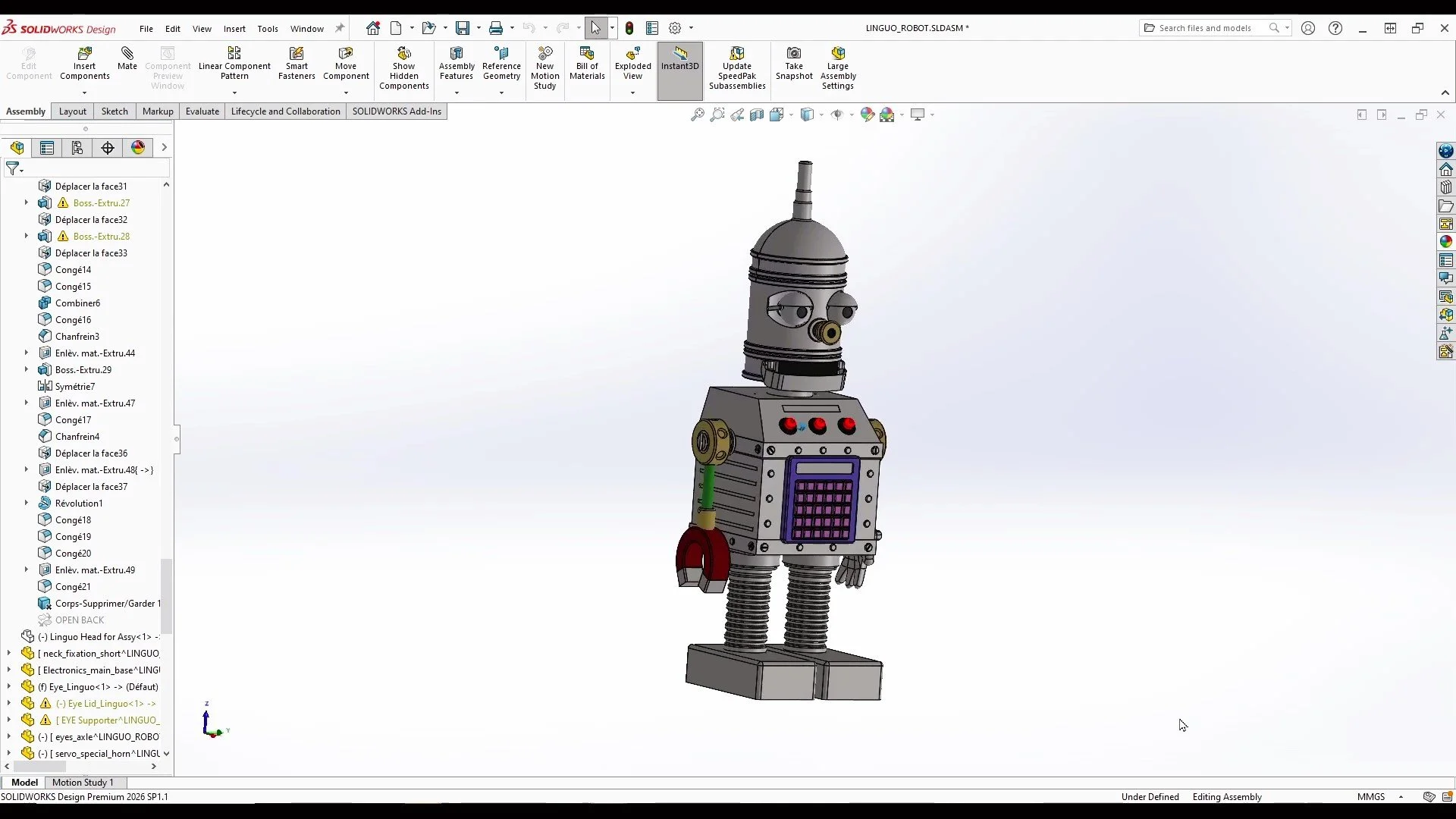
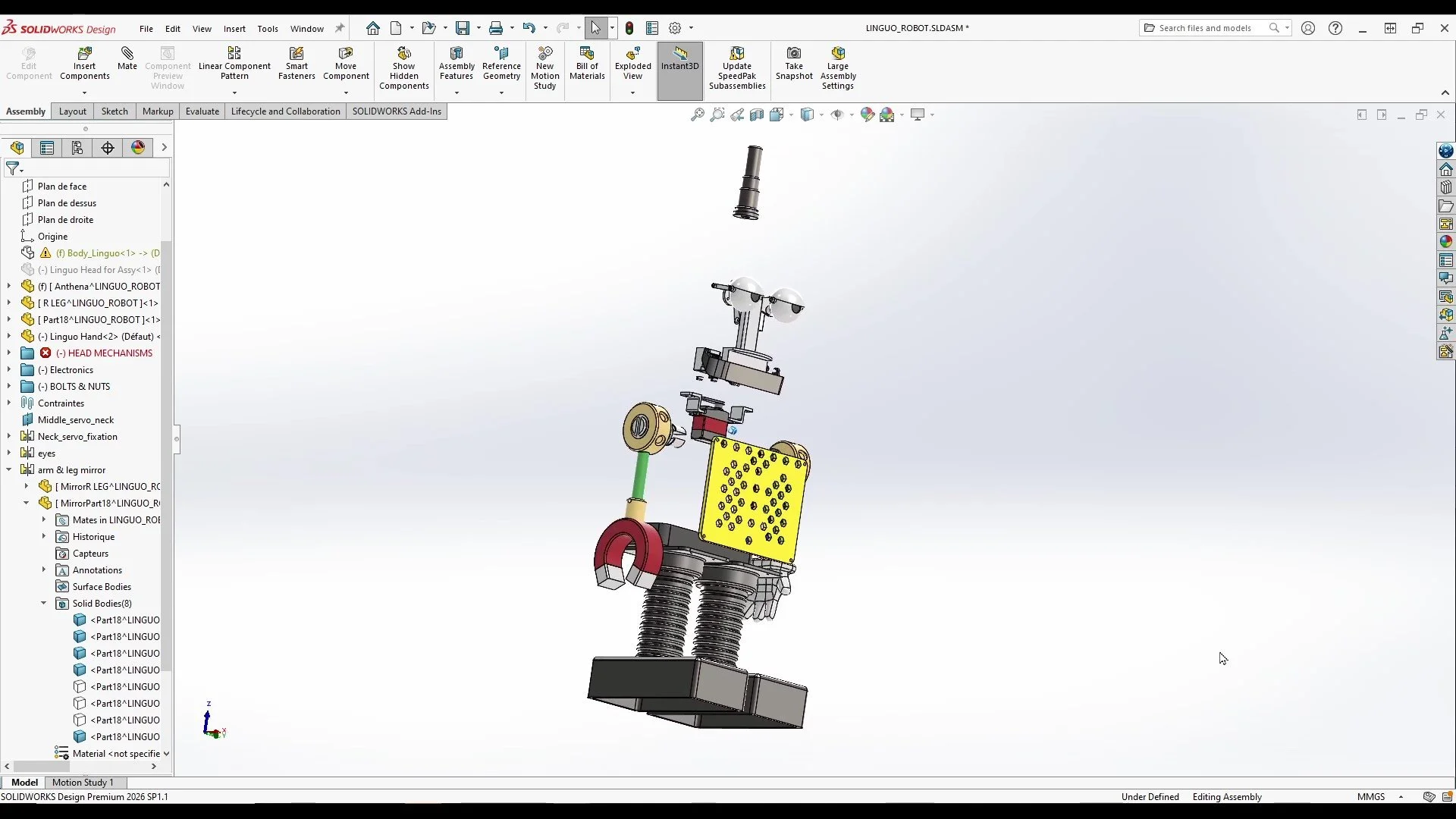
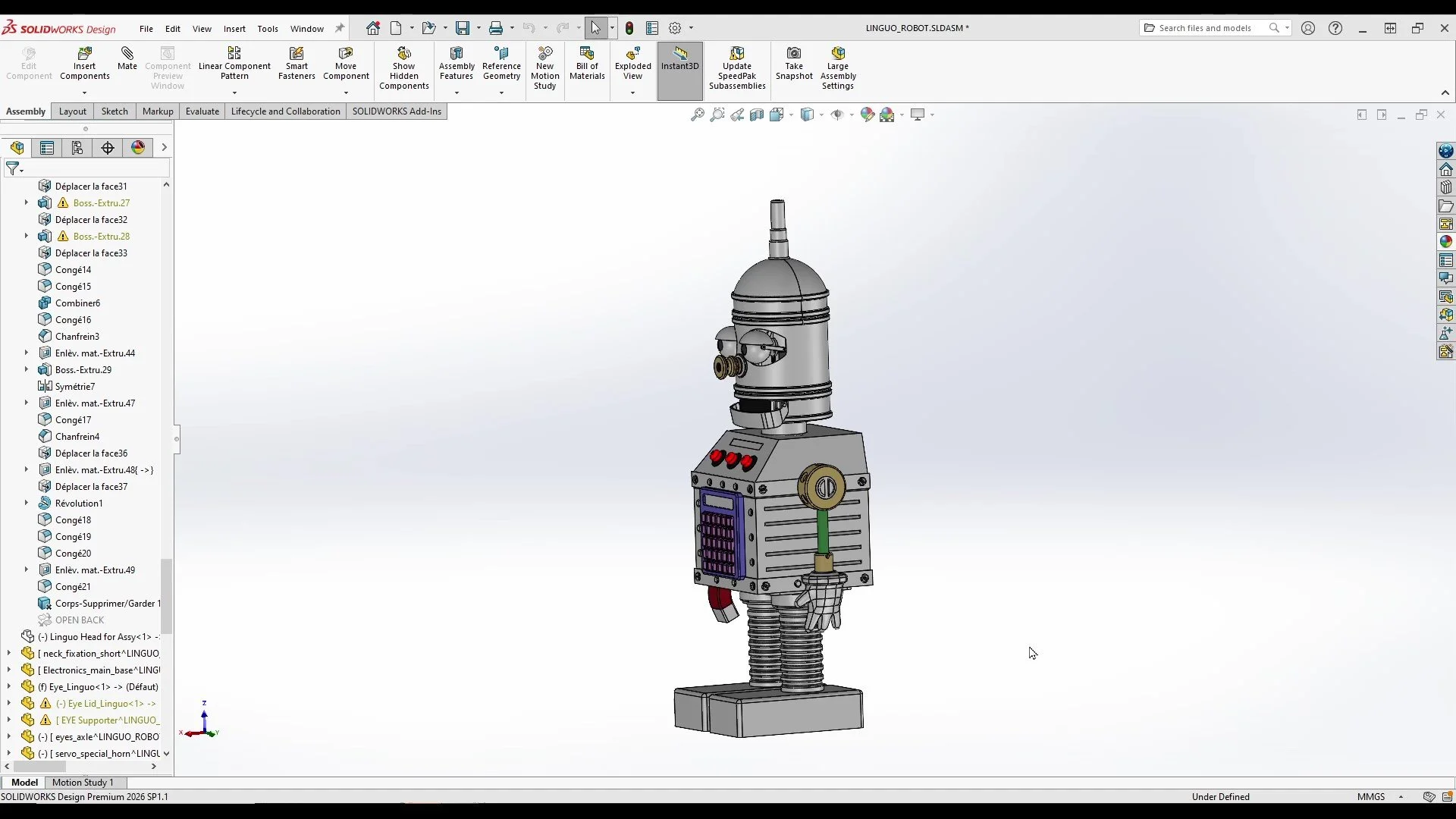
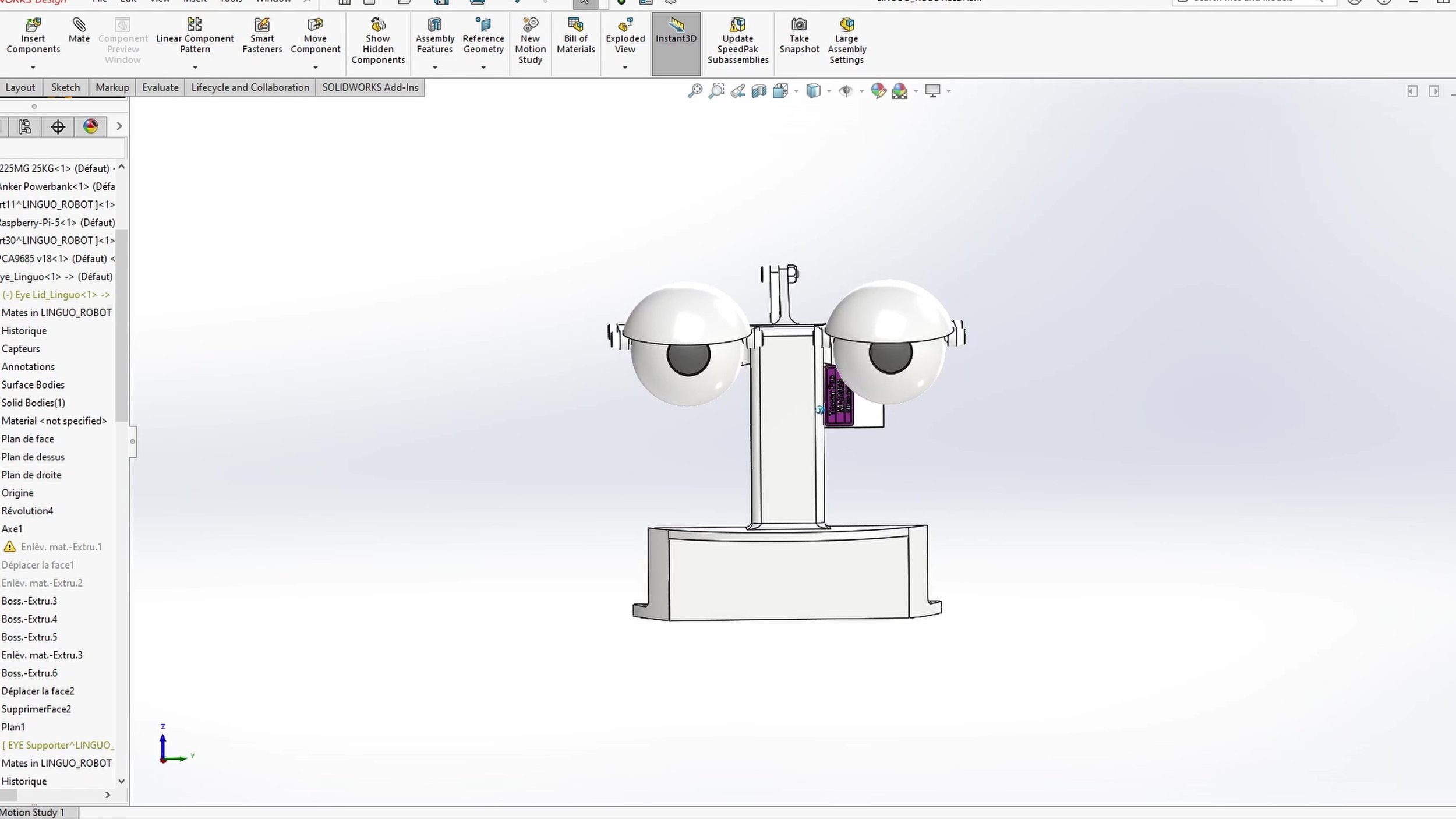
So I used reference images from the episode to create the general silhouette of Linguo, then modeled the robot from scratch in SolidWorks.
The goal was to keep the character recognizable while making enough space inside for the mechanics, electronics, batteries, wires, and Raspberry Pi.
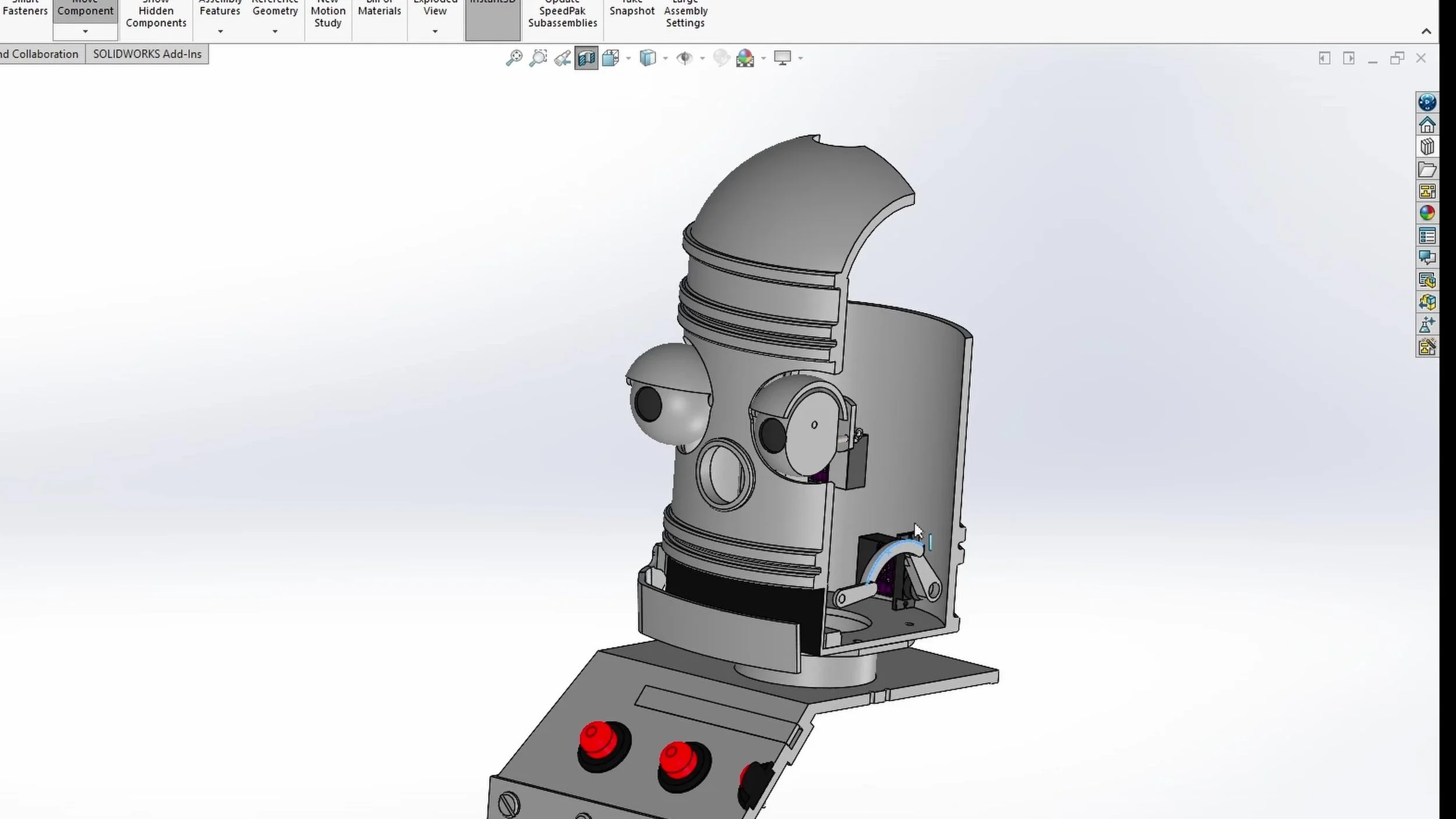
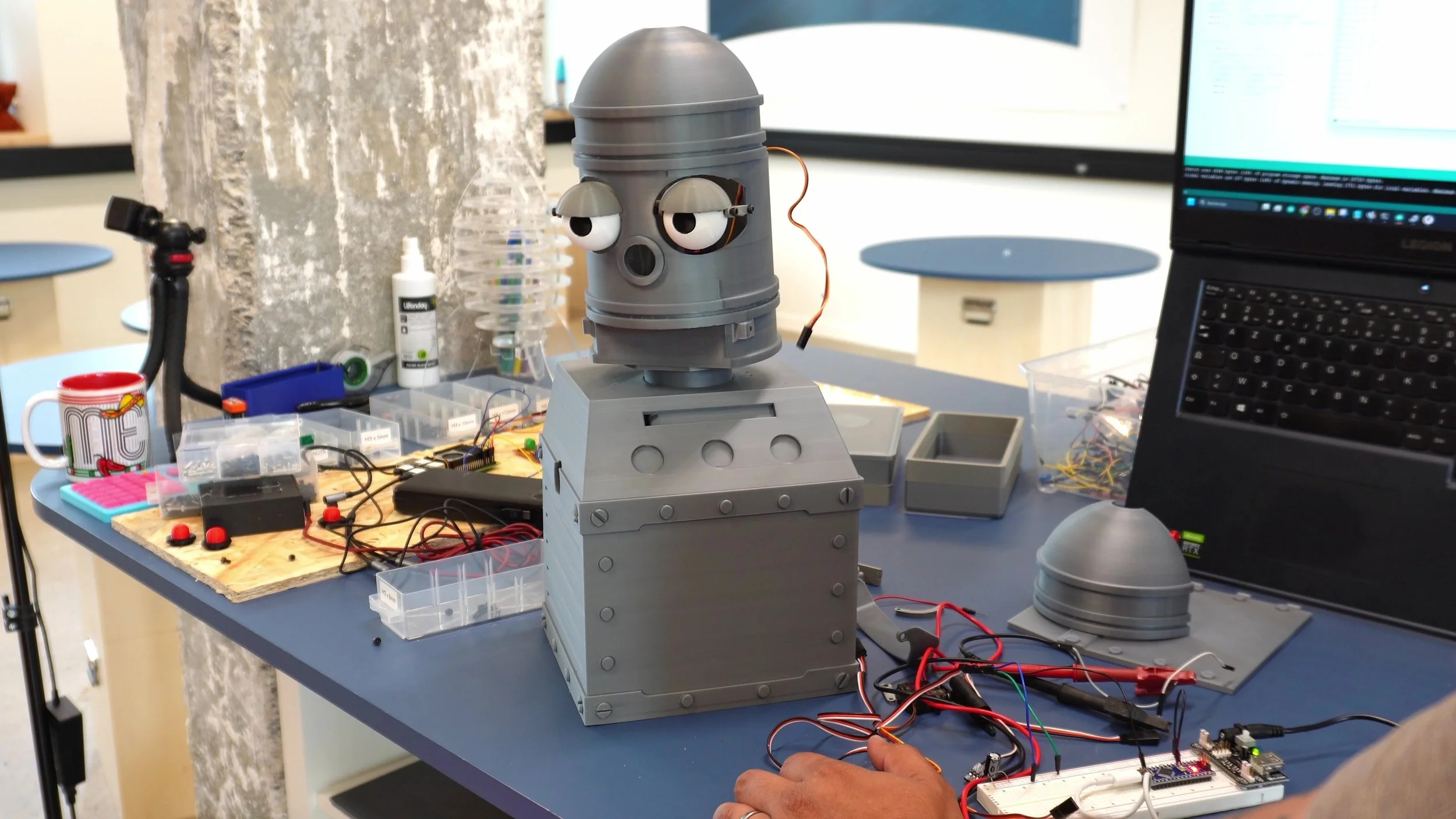
The body was designed hollow, and I also created a removable back cover for the head so I could access the internal mechanism during assembly and testing.
This part of the project was a balance between keeping the cartoon look and making the robot physically possible.
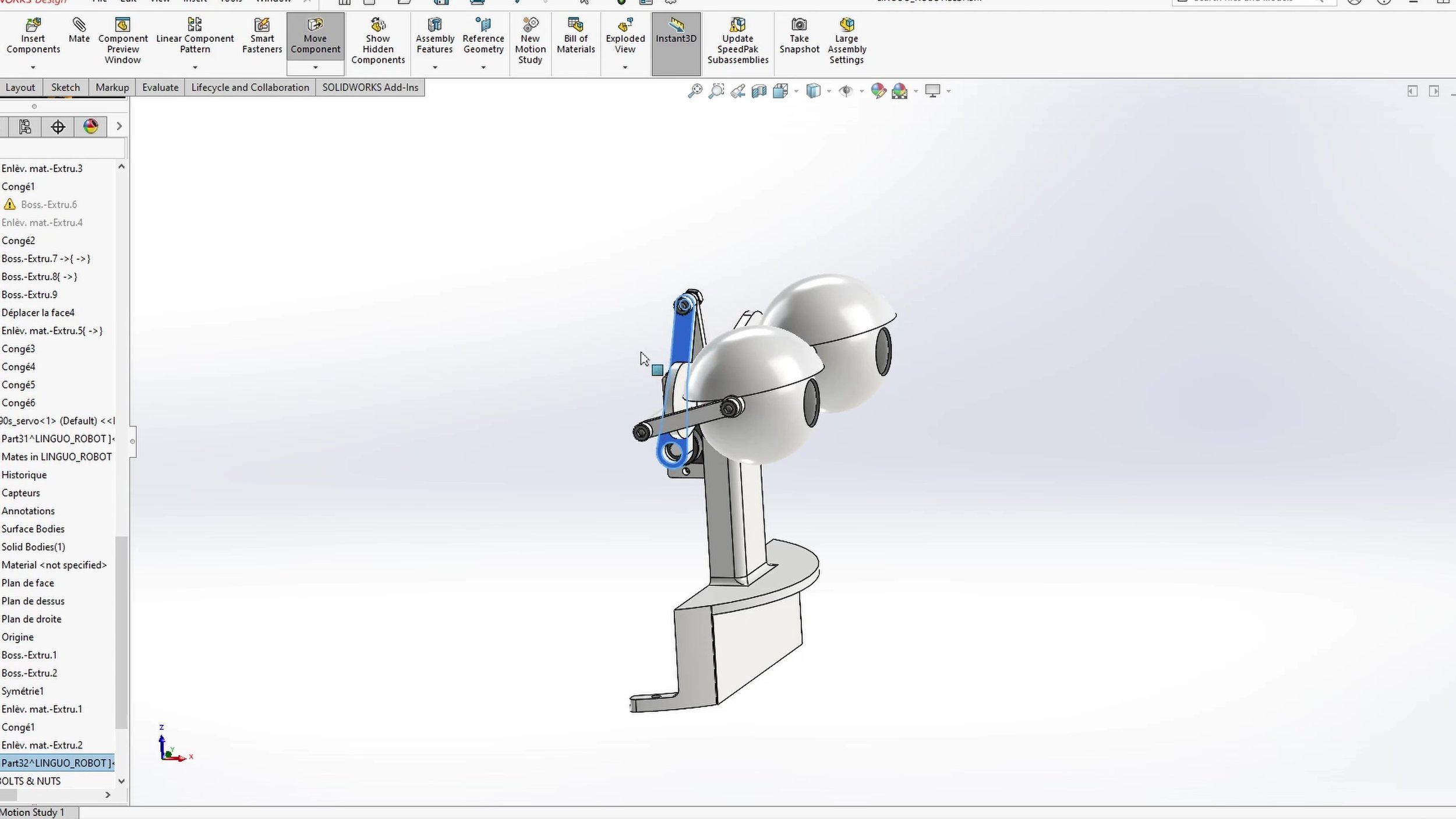
Designing the moving eyes, eyelids, jaw, and neck
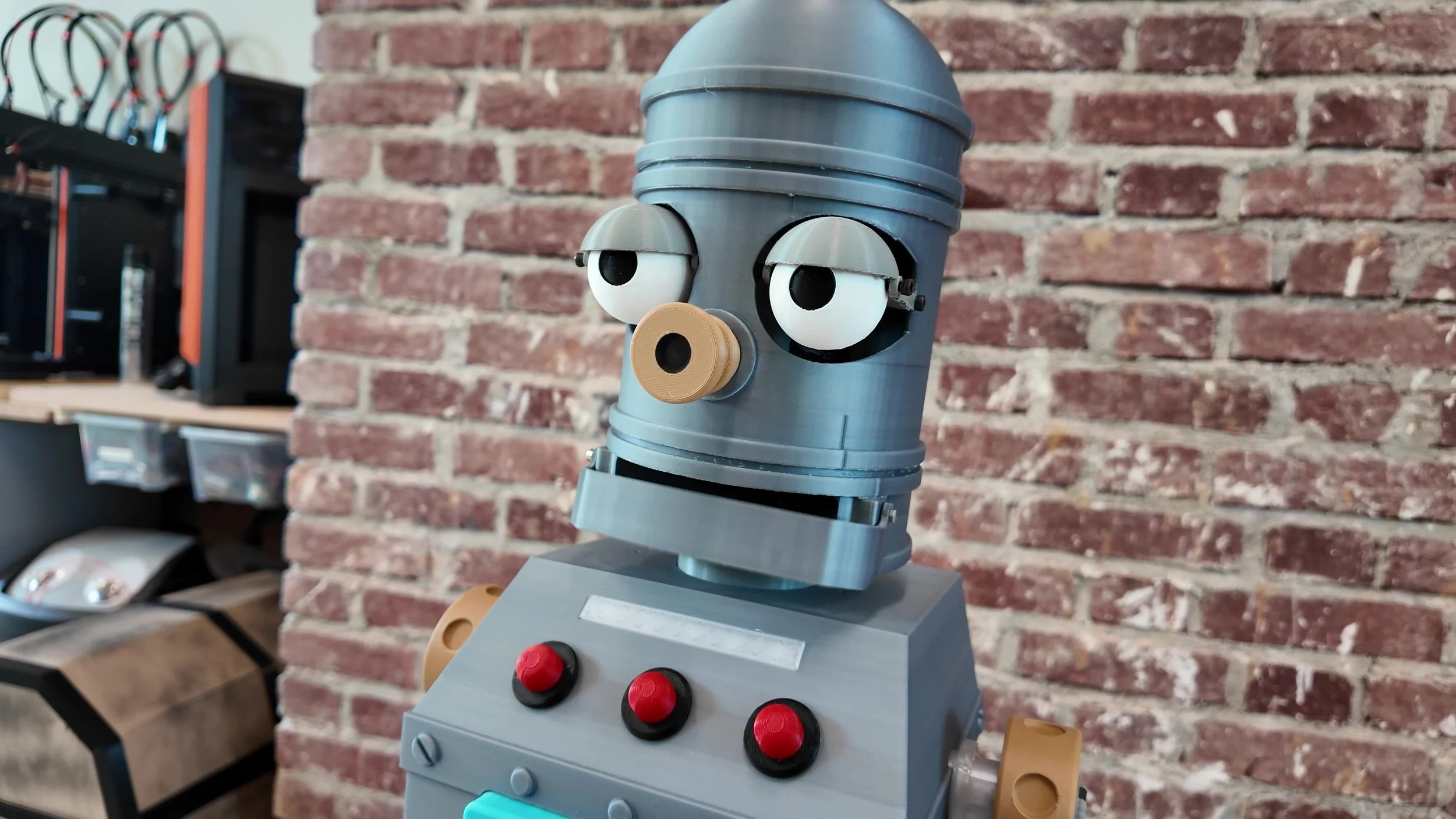
One of the most important parts of Linguo is his expression.
If the robot only stood still, he would look like a nice prop. But I wanted him to feel alive.
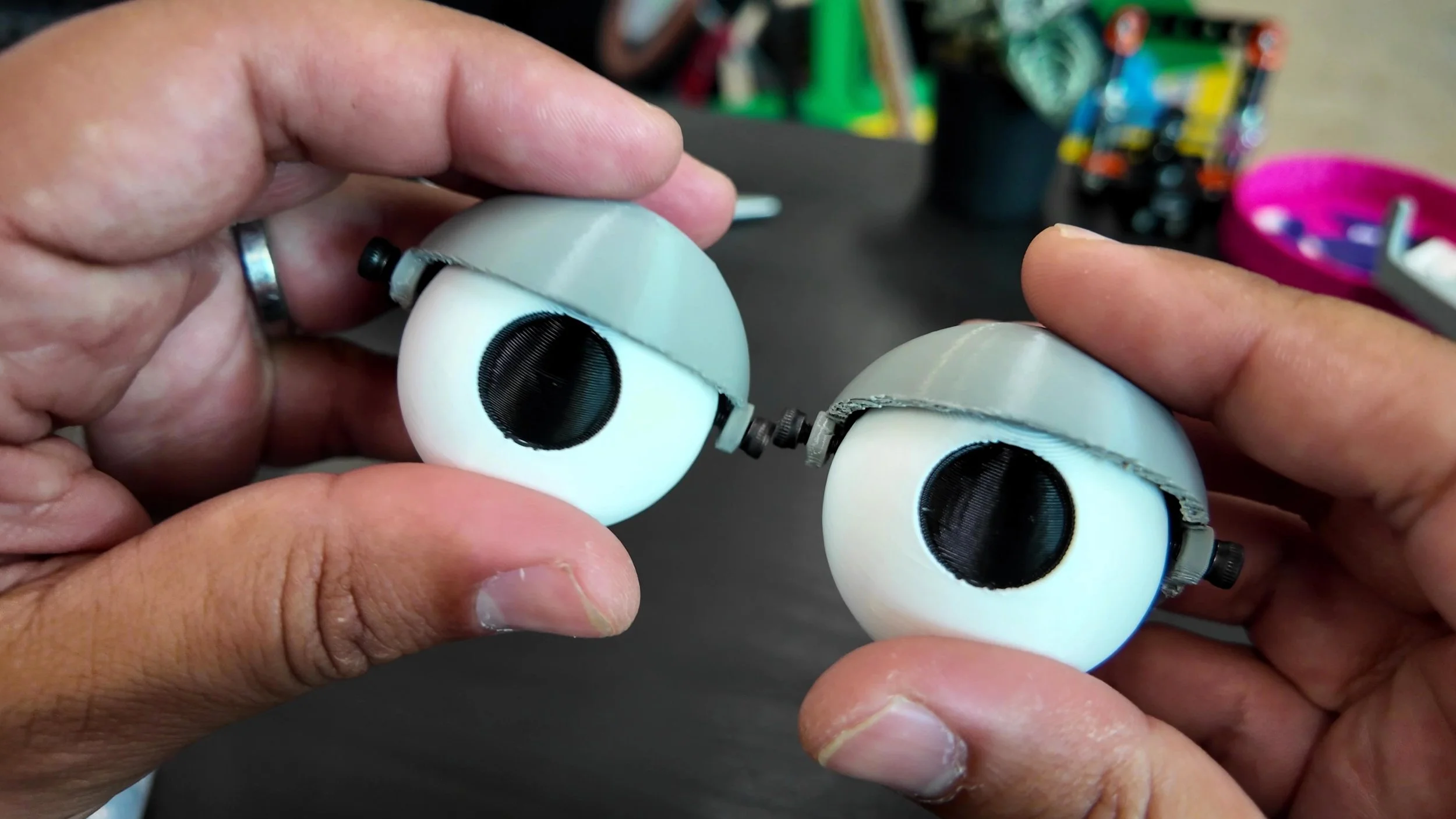
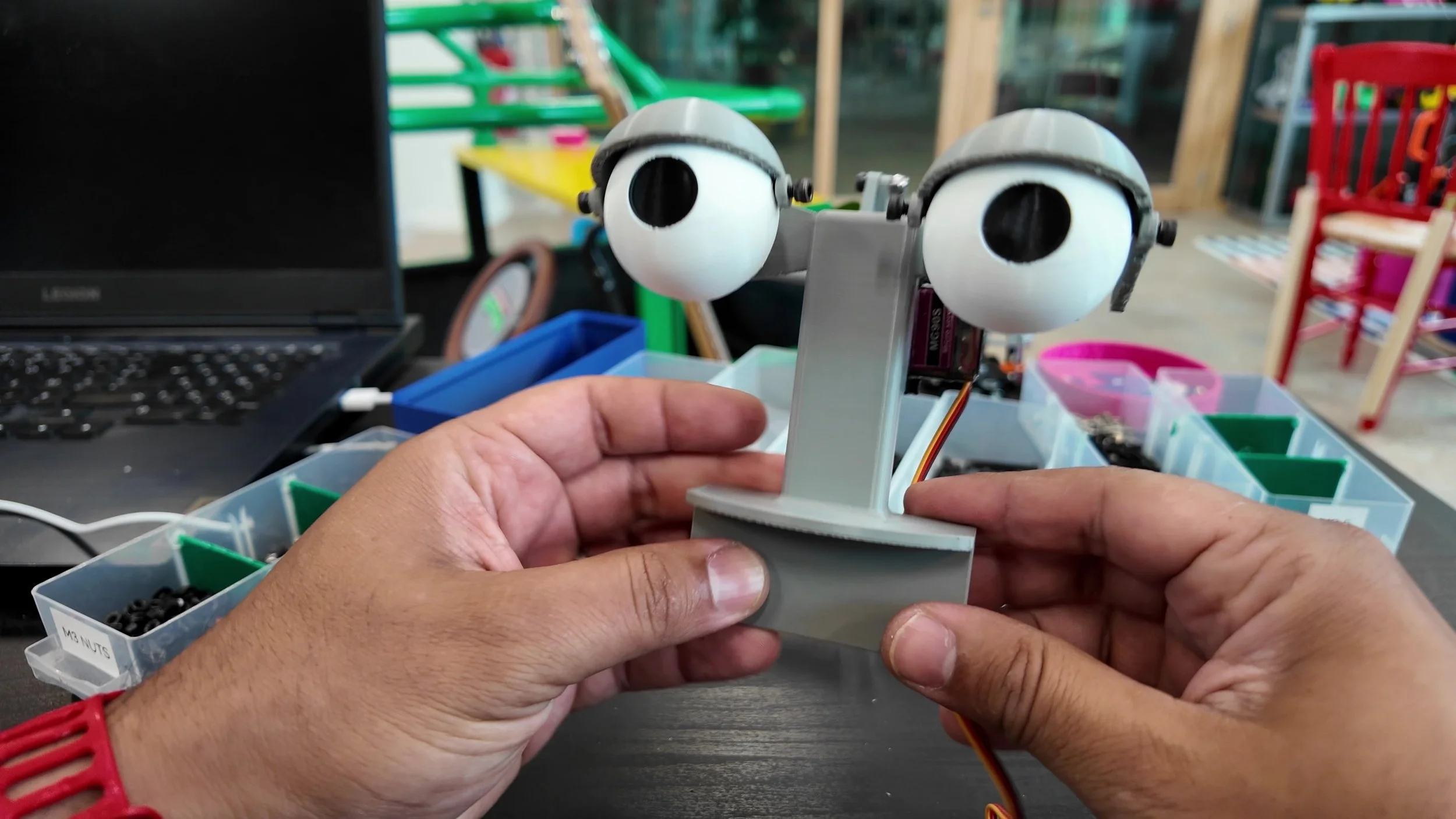
So I designed a mechanism for the eyes and eyelids. The idea was to give him that slightly tired, judgmental expression that makes Linguo funny.
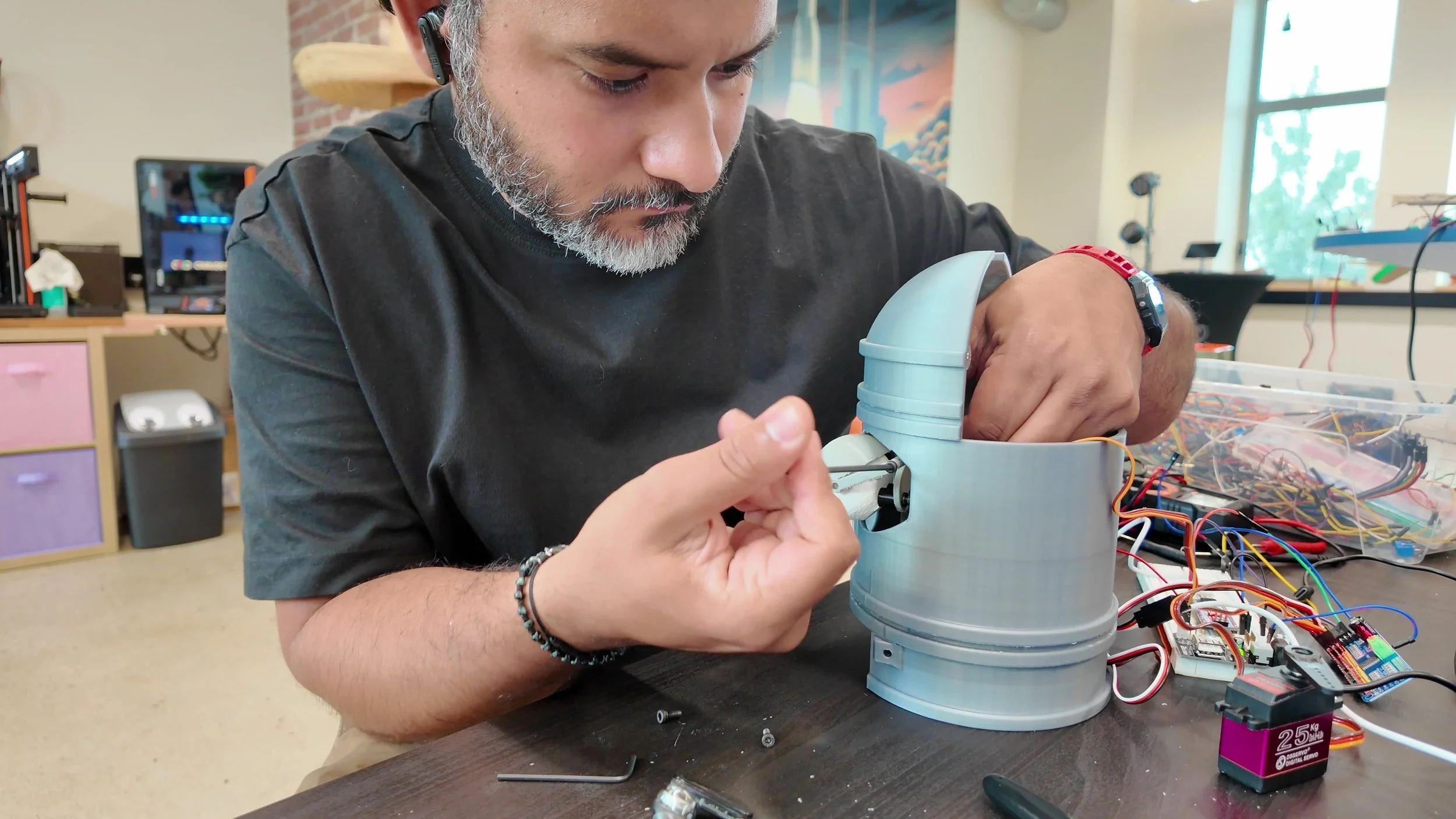
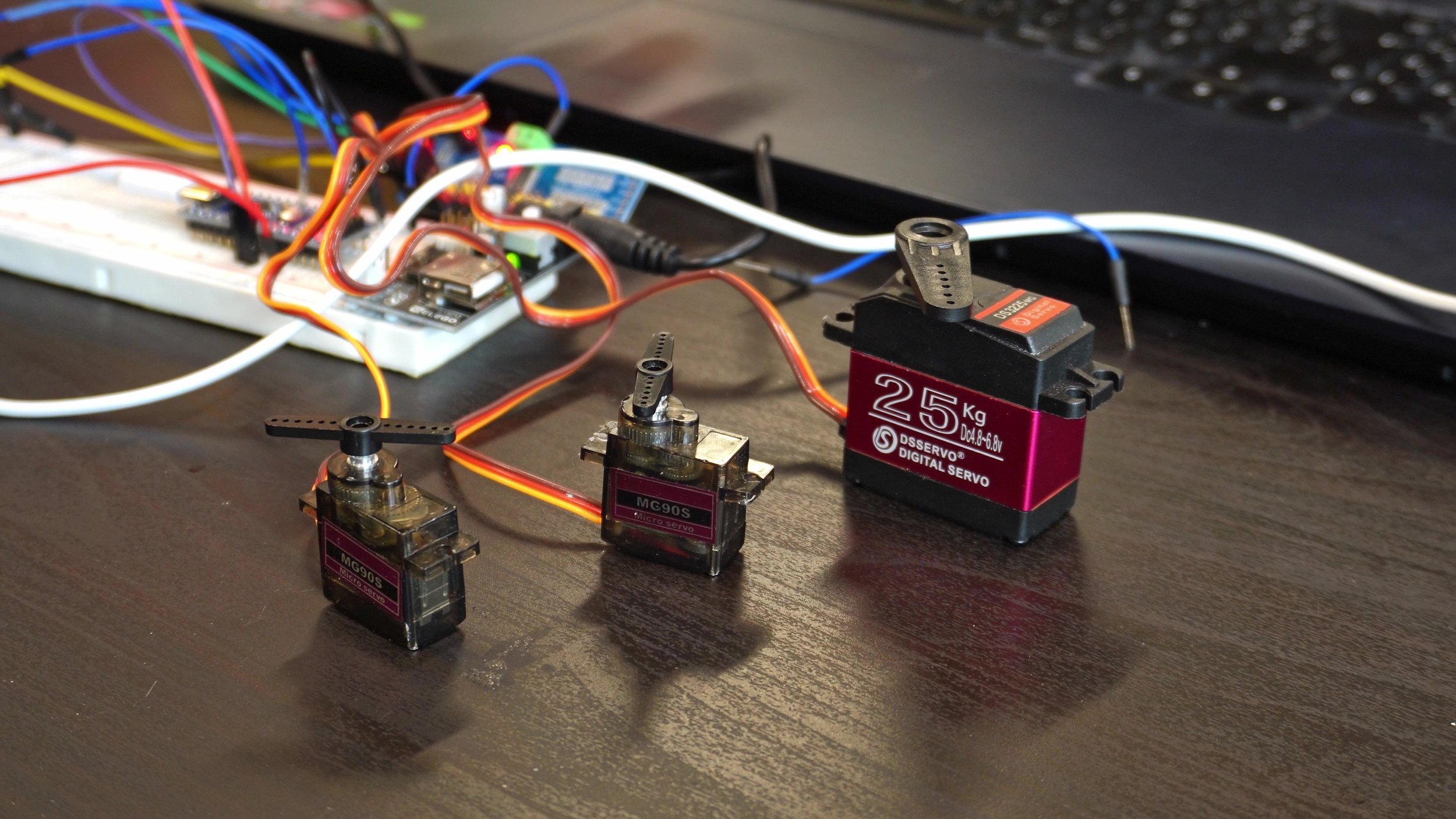
The eyelids are controlled with servos, and I tested the movement before installing everything inside the head. I also added a jaw mechanism so the mouth could open and close when Linguo speaks.
The neck movement was another important detail. Even a small head movement makes the robot feel much more like a character.
This part took a lot of testing because everything had to fit inside a very small space.
A mechanism can work perfectly on the table, but once you try to put it inside the robot, everything becomes more complicated.
Giving Linguo an AI brain with Raspberry Pi
For this build, I used a Raspberry Pi connected to an AI system. The idea was simple:
I say something wrong in English, Linguo listens, understands the mistake, and answers with a correction.
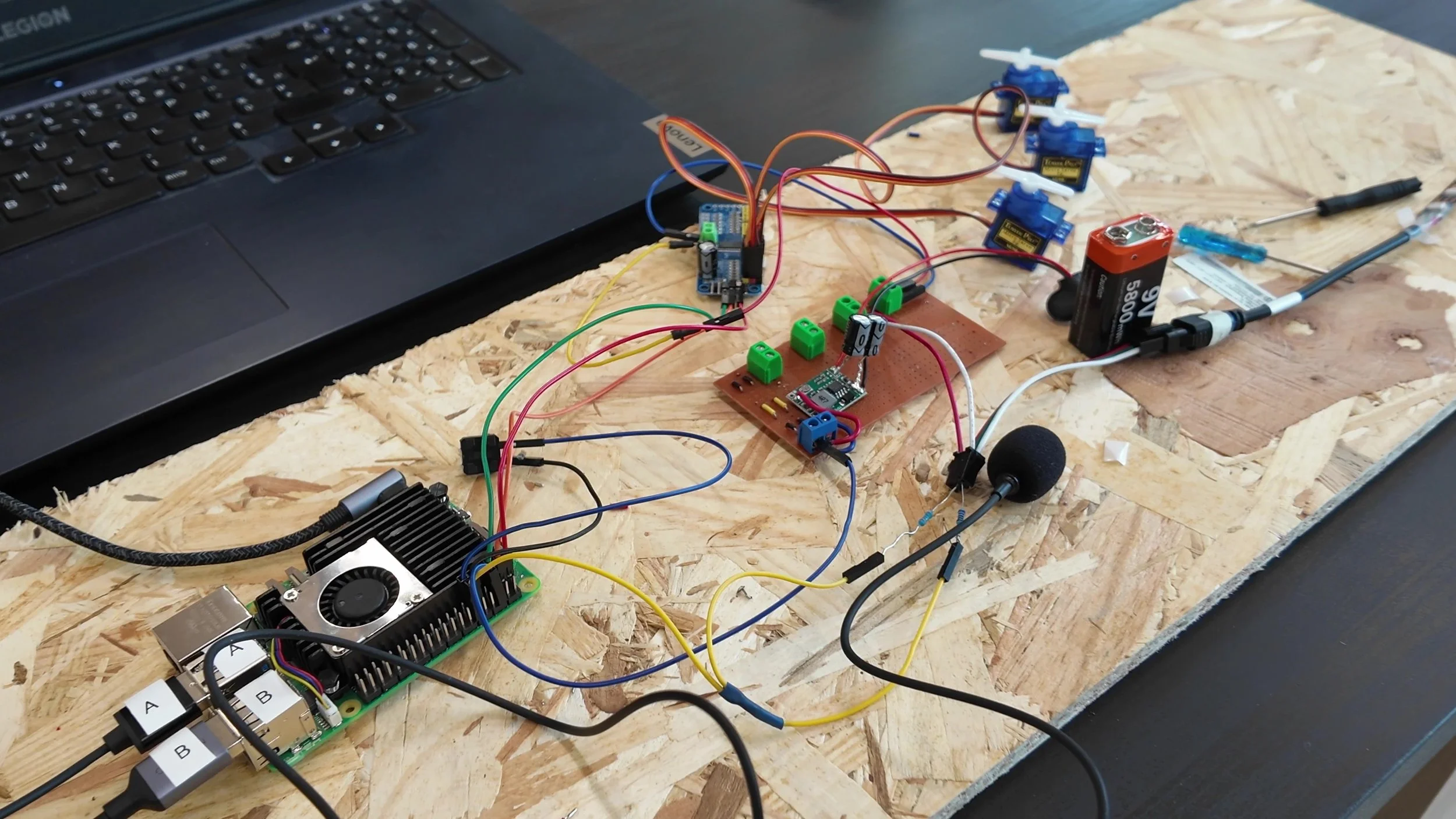
To make that work, I needed to connect several elements together:
a microphone
a speaker
the Raspberry Pi
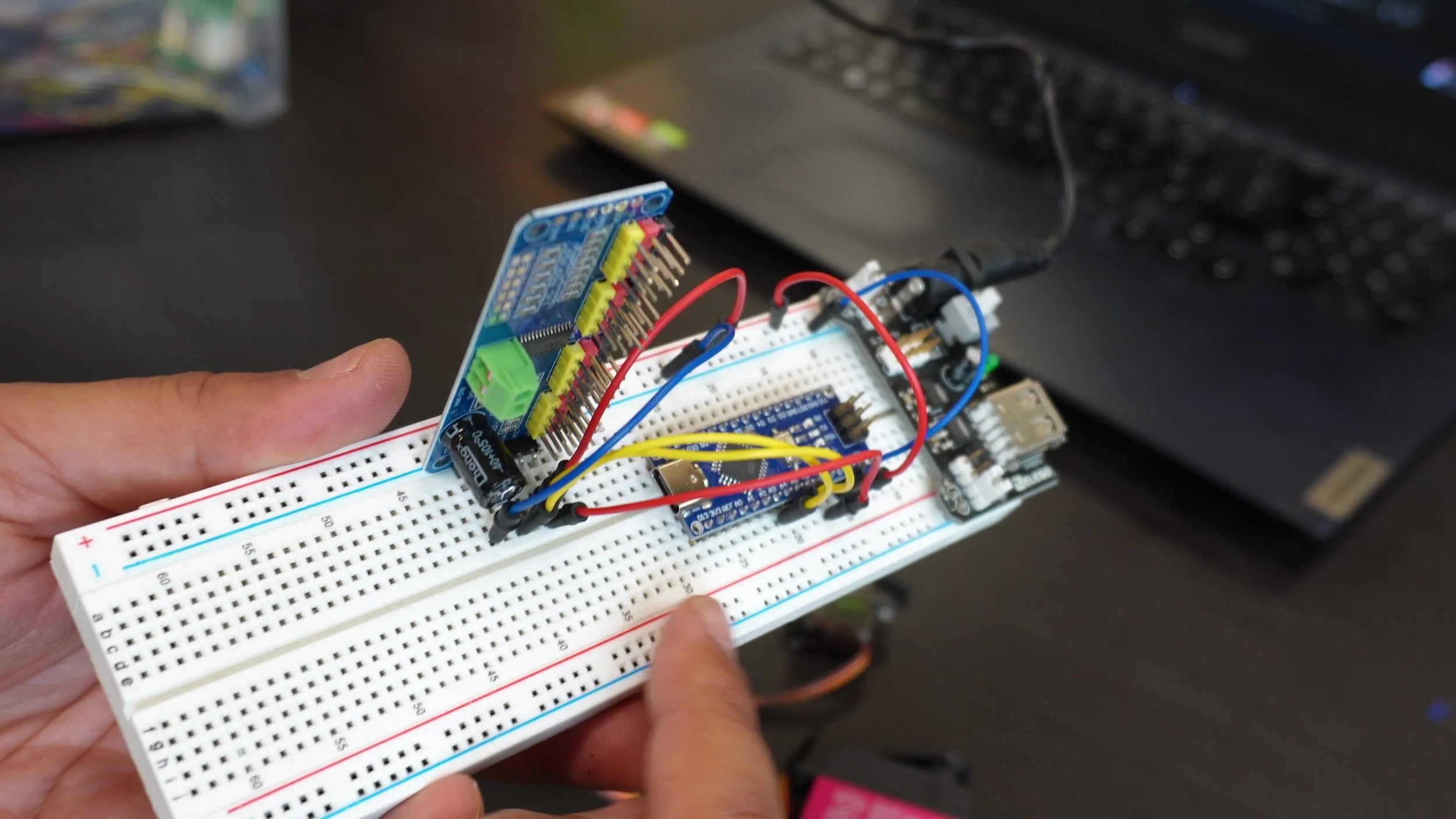
a servo controller
the lights
the motors
the power system
and the AI response
This was probably the most difficult part of the project.
The wiring became messy very quickly, and the code needed a lot of testing. I used AI tools to help me write and debug parts of the program, but even with help, there was still a lot to fix and understand.
At one point, Linguo could technically speak… but his voice sounded completely cursed.
He went through several versions: chipmunk, robot, monster, and something that sounded like a demon calculator.
Eventually, after a lot of testing, Linguo was finally able to listen and answer.
Organizing the electronics inside the body
Once the AI system was working, I had a new problem:
How was I going to fit all of this inside Linguo?
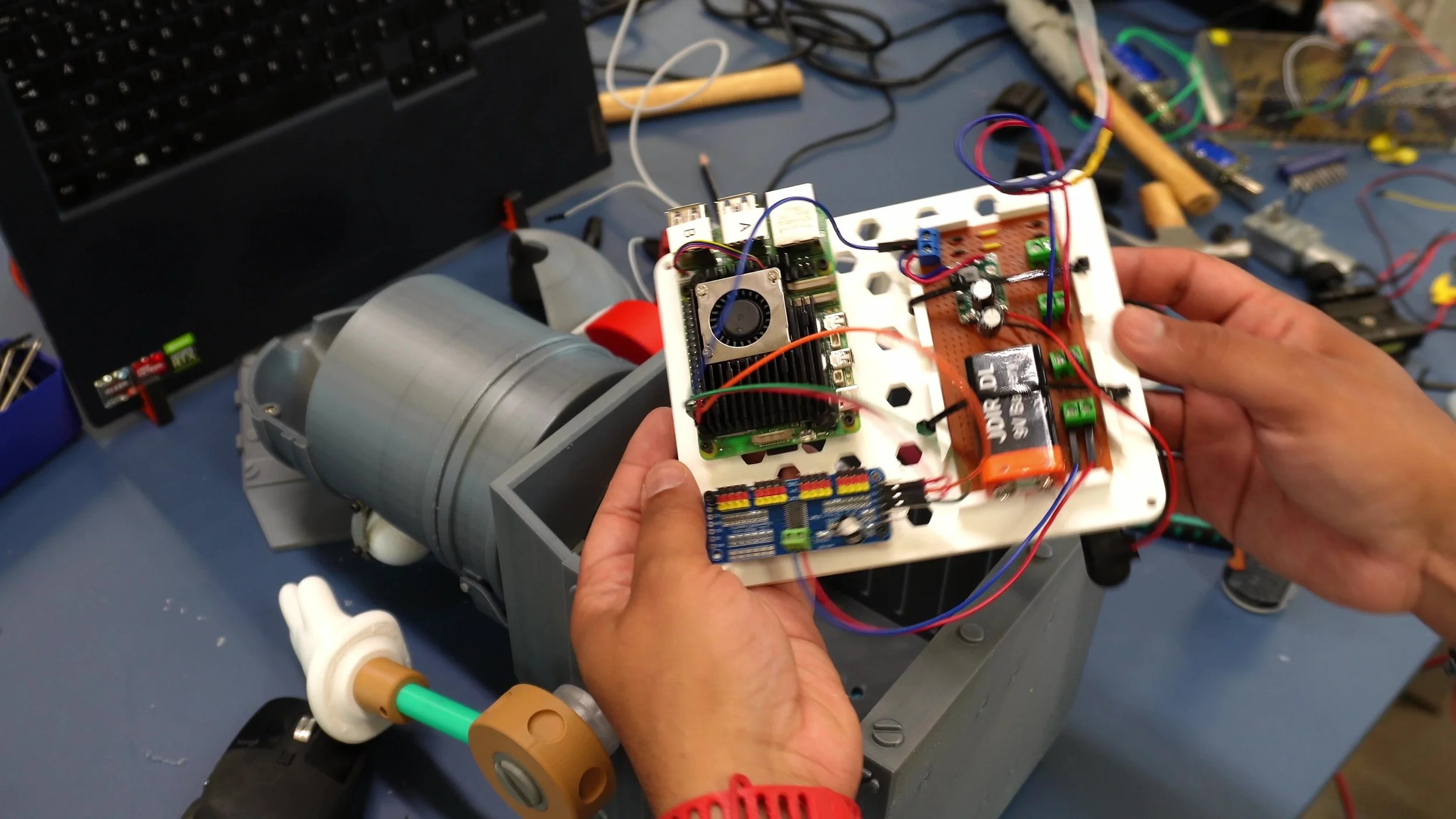
The Raspberry Pi, speaker, microphone, wires, servo controller, batteries, and voltage converter all needed a place inside the robot.
So I designed a custom internal mounting plate to hold the components in position and make the wiring a little less chaotic.
This is one of the parts people don’t always see in a finished project, but it makes a huge difference. If the electronics are not organized, the robot becomes almost impossible to assemble, repair, or improve later.
The final result
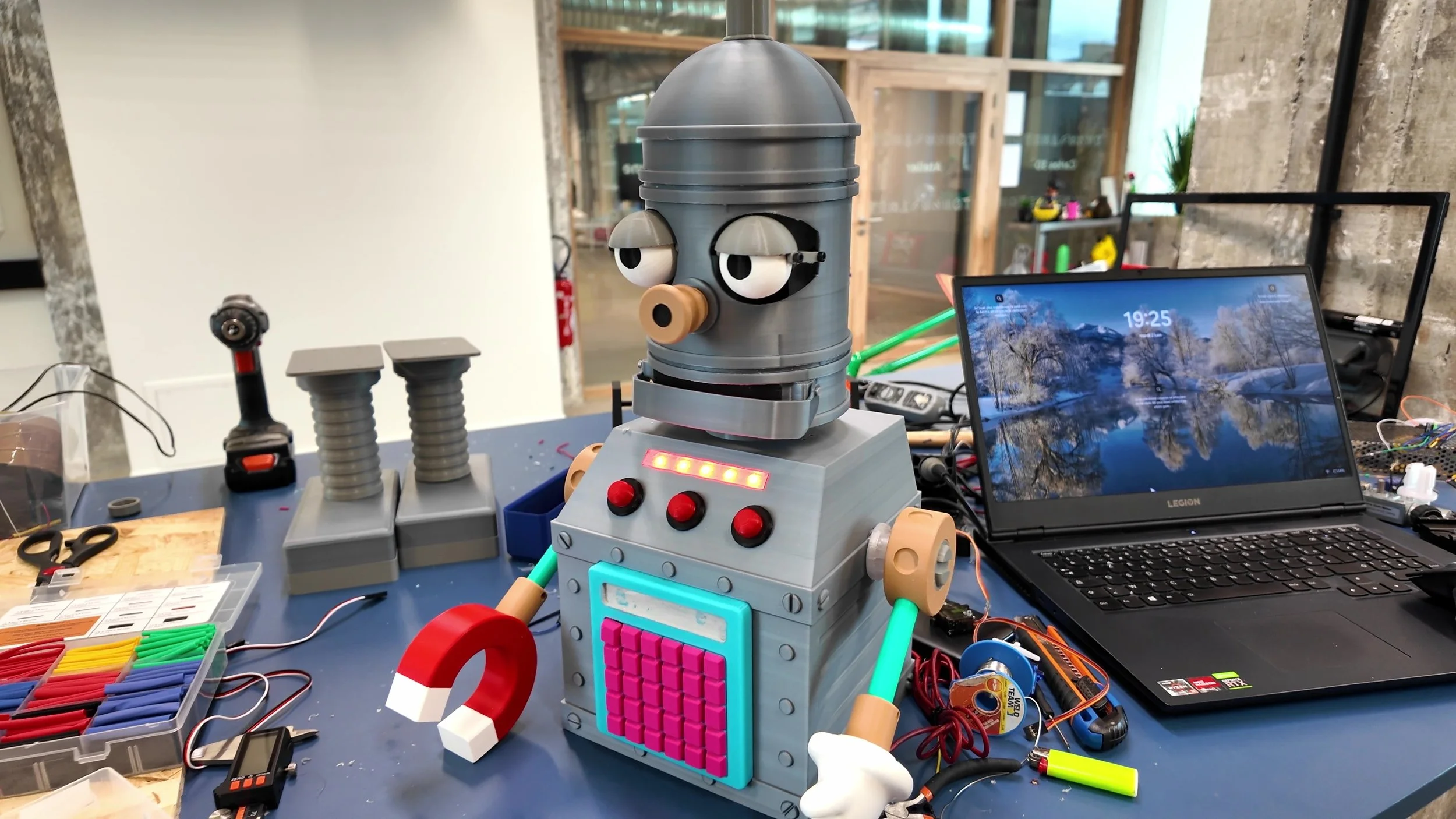
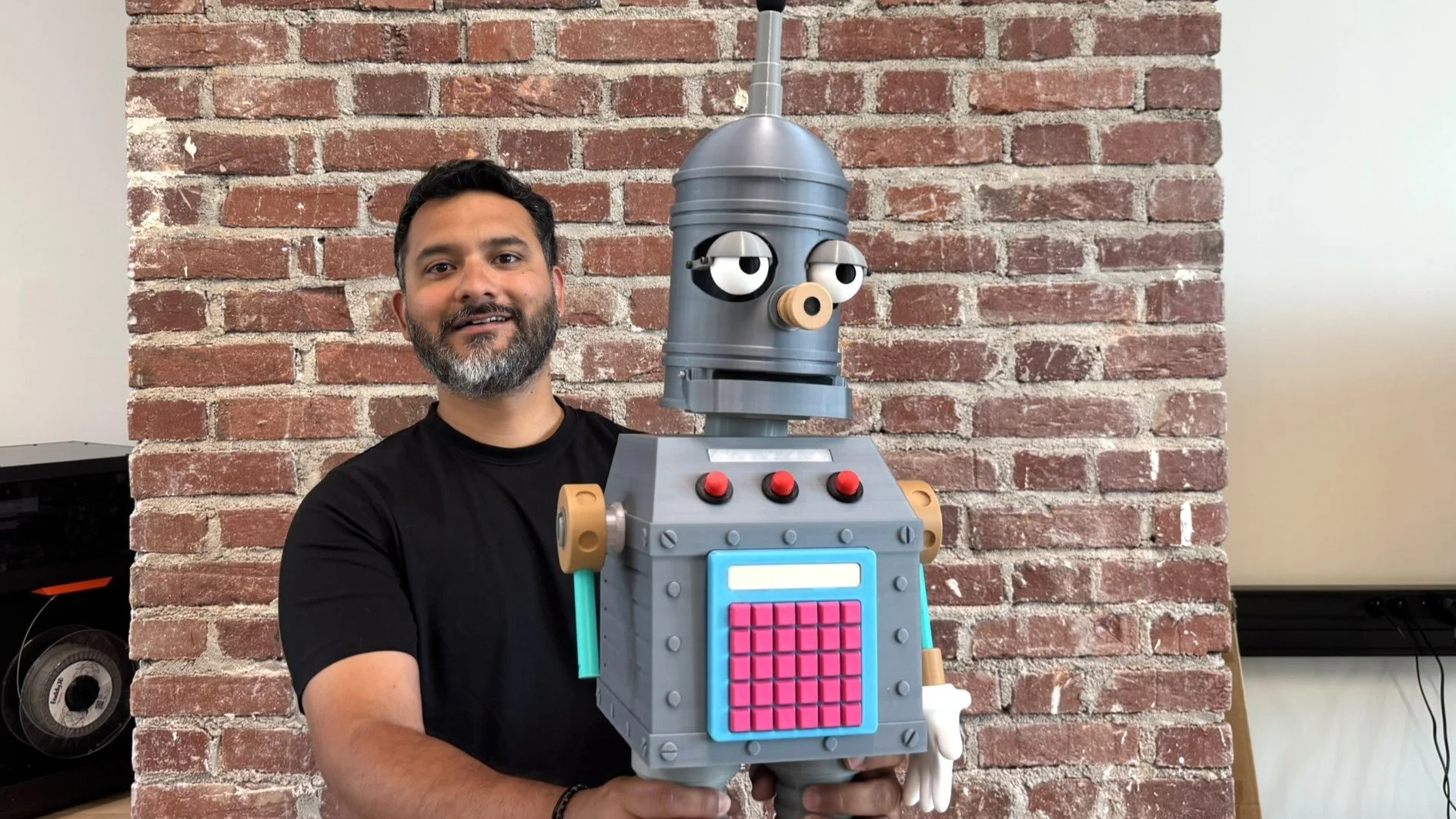
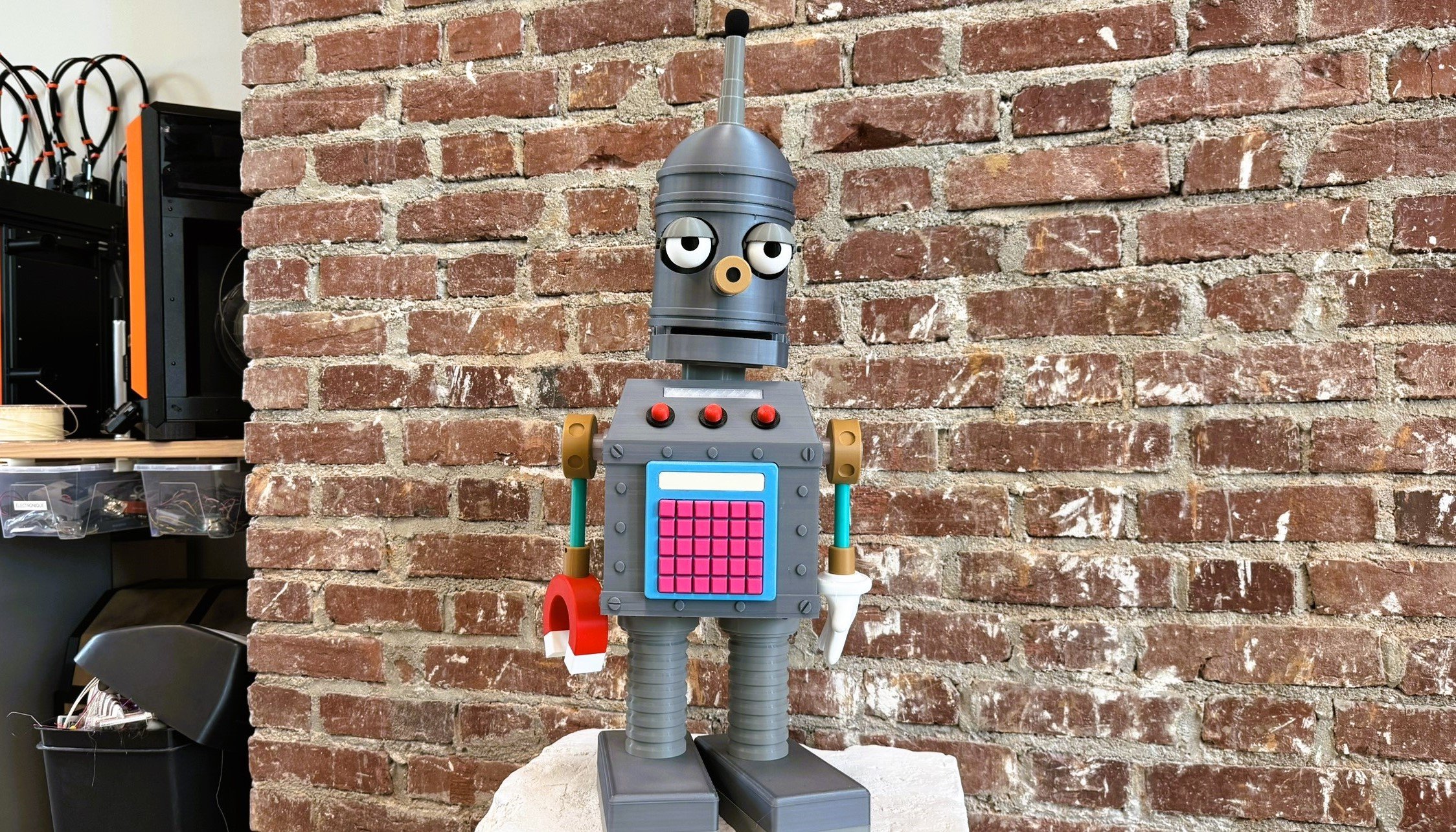
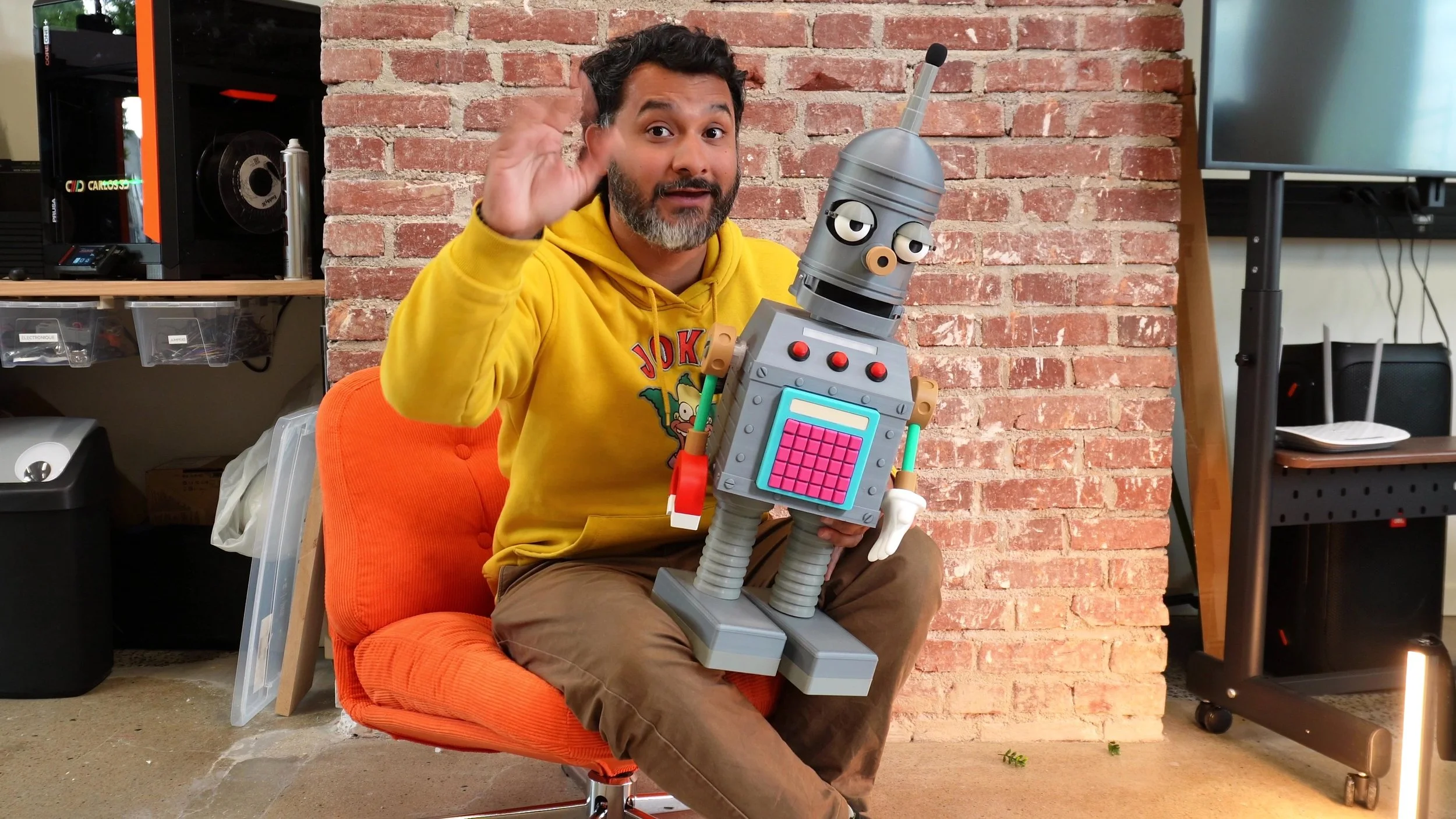
After designing, printing, wiring, programming, testing, and fixing a lot of small problems, Linguo finally worked.
He can move, talk, listen, and correct my English.
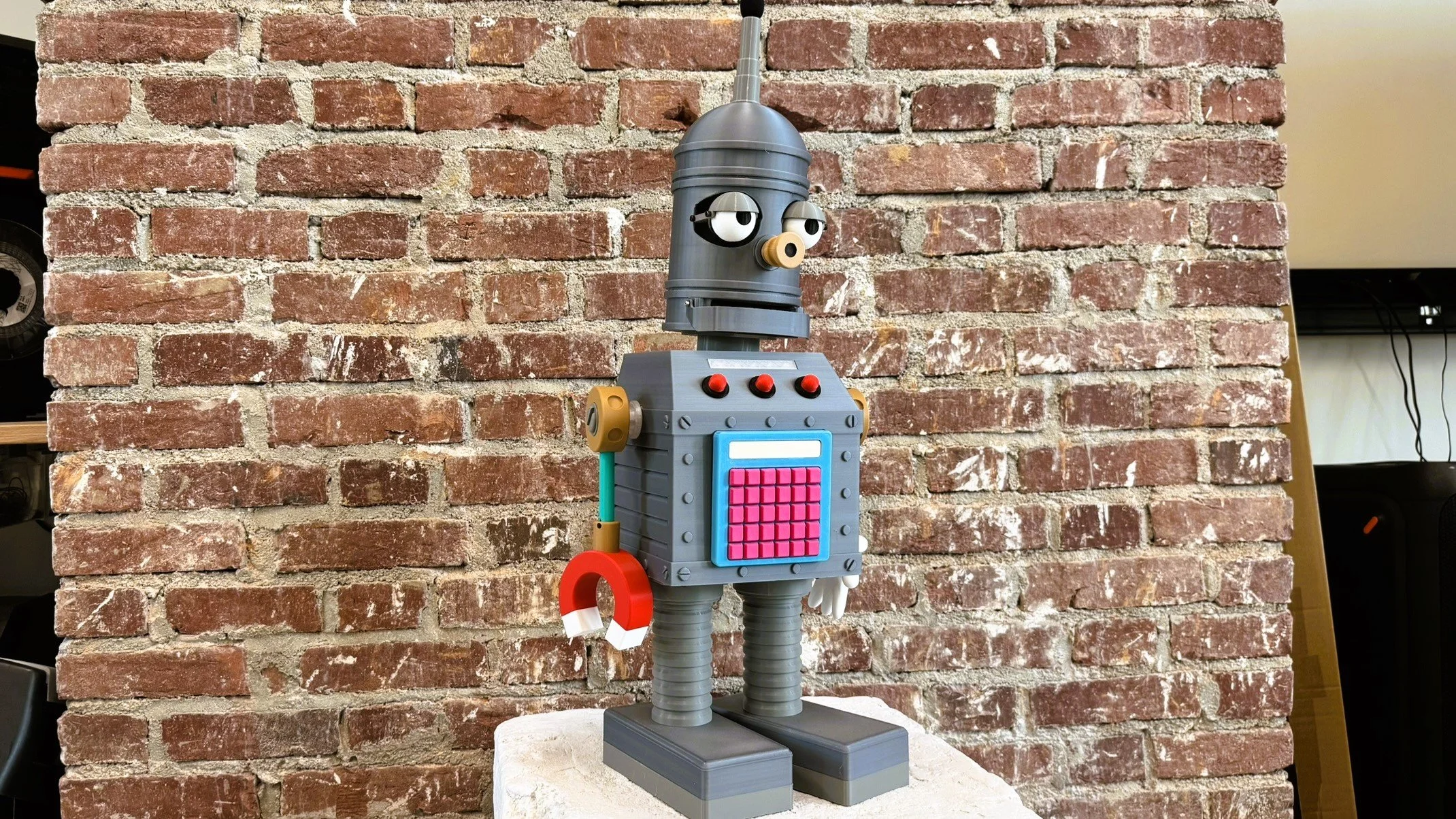
The final robot is not just a decorative prop. It is a working 3D printed AI robot inspired by one of my favorite inventions from The Simpsons.
Of course, there are still things I want to improve, especially the voice and the interaction speed. But seeing Linguo move and answer for the first time was one of the most satisfying moments of the whole build.
I built a robot to judge my English…..And honestly, he does it very well.
What I learned from this project
This build reminded me that simple cartoon designs are not always simple in real life.
A character like Linguo looks basic on screen, but making him physical means solving a lot of hidden problems:
how to scale the robot
how to make the parts printable
how to fit mechanisms inside the body
how to control the movement
how to power everything
how to make AI feel like part of the character
and how to make the final robot feel alive
It was also a good reminder that a successful maker project is not only about the technical side.
The character matters too.
The movement, the eyes, the voice, and the reaction all help turn a 3D printed object into something people can connect with.
What should Linguo correct next?
Now that Linguo is alive, I want to keep testing him.
If you have a sentence you want Linguo to correct, leave it in the comments on the YouTube video.
And if you want to see more cartoon inventions turned into real objects, you can follow my work on YouTube, Instagram, and TikTok 👇