
Anatomy in 3D: Printed Models for Learning and Display
Anatomy is much easier to understand when you can see it, touch it, rotate it, and compare it from different angles.
That is why 3D printing can be such a powerful tool for educational and professional anatomy projects. Instead of relying only on flat images, screens, or diagrams, 3D printed models make complex structures more accessible, visual, and memorable.
For this showcase, we produced a selection of anatomy-themed 3D prints designed to demonstrate how different models, scales, colors, and materials can be used to create educational displays, training supports, and visual learning tools.
Creating anatomy models for education and communication
This project was created to show how 3D printing can support medical education, science communication, workshops, and professional presentations.
The goal was not only to print interesting objects, but to demonstrate how anatomical models can be used to explain complex subjects in a more concrete way.
These types of 3D printed models can be useful for:
Schools and universities
Medical and paramedical training centers
Science museums and educational exhibitions
Healthcare companies and startups
Professional workshops and demonstrations
Businesses creating educational displays or internal training tools
A physical model immediately changes the way people interact with information. It invites observation, discussion, and curiosity.
The main piece: a large-scale écorché anatomy model
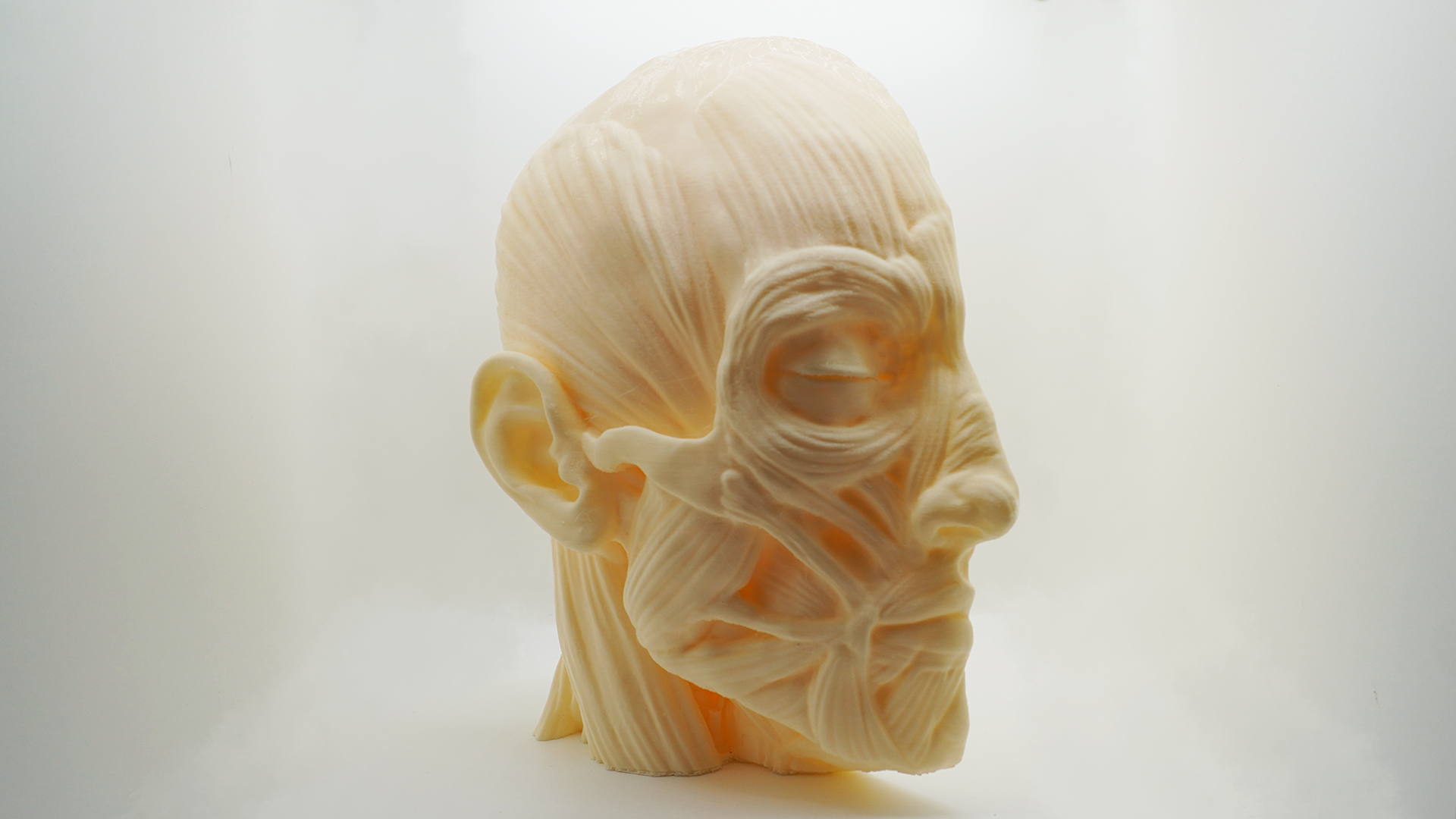
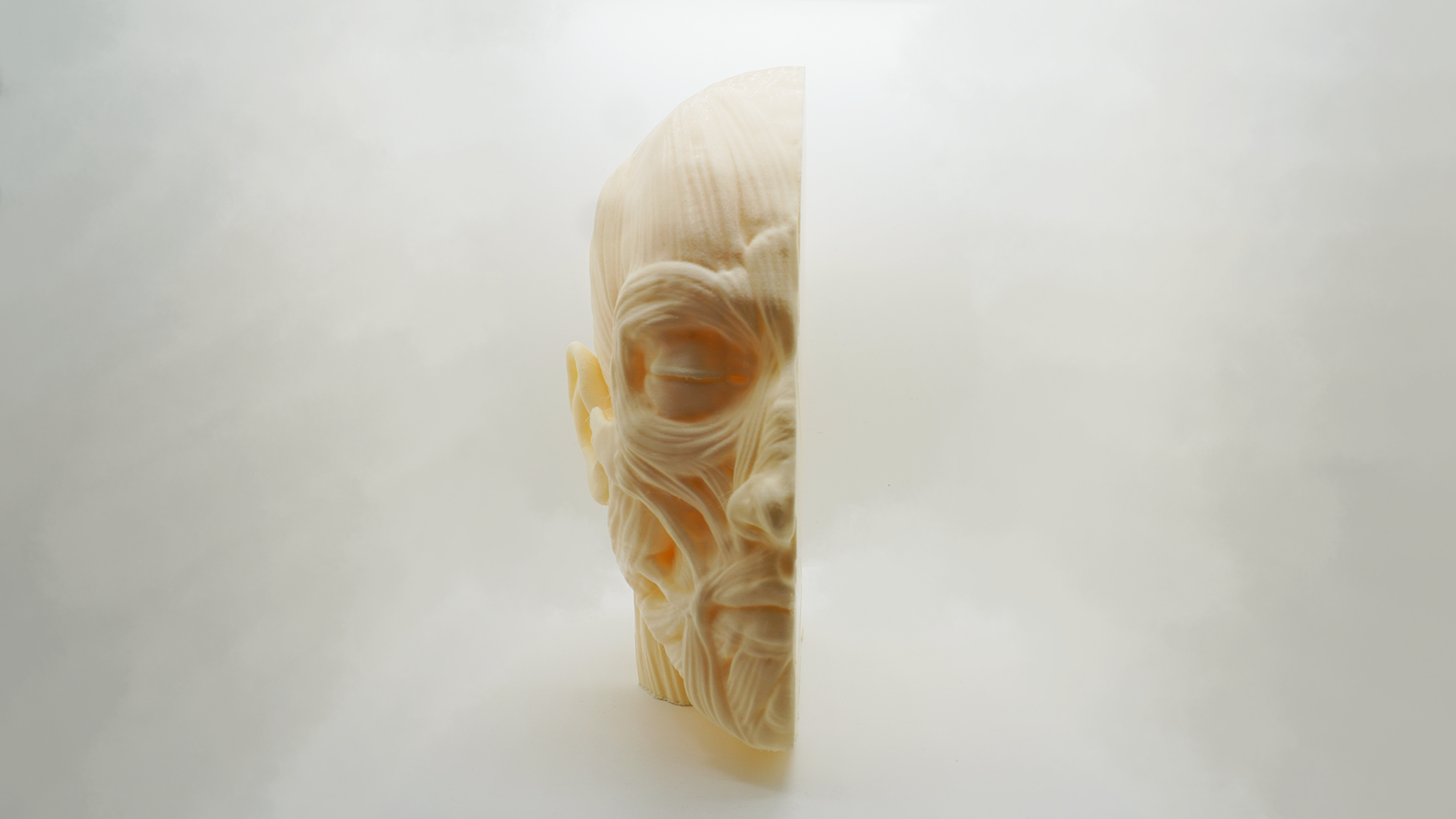
The central piece of this project is an écorché-style human anatomy model, printed at 160% of its original size.
For this showcase, we printed only the human anatomy side of the model, focusing on the muscular and anatomical details rather than the skull bookend version.
Scaling the model up made the details easier to see and gave the final object a stronger presence. This makes it ideal for display, education, or demonstration contexts where the model needs to be visible and understandable from a distance.
This piece shows how 3D printing can transform a digital anatomy file into a physical object with real visual impact.
A skeletal hand model & a knee joint for observation and anatomy study
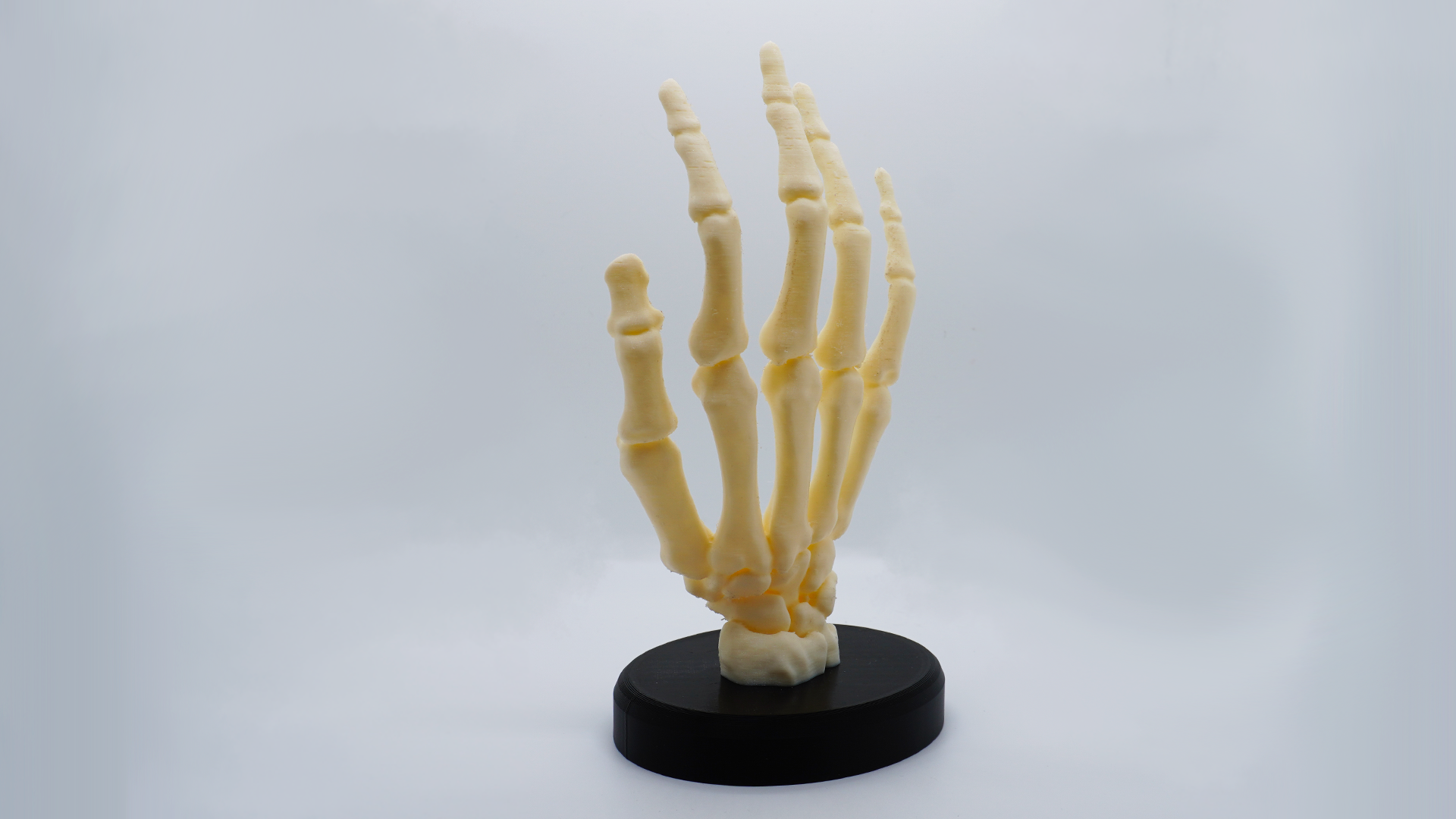
The skeletal hand model was selected because the hand is one of the most recognizable and complex parts of the human body.
With many small bones and visible articulations, it is a great example of how 3D printing can help make anatomy more tangible.A model like this can be used to introduce bone structure, proportions, and the relationship between different parts of the hand in a way that is easier to understand than a flat diagram.
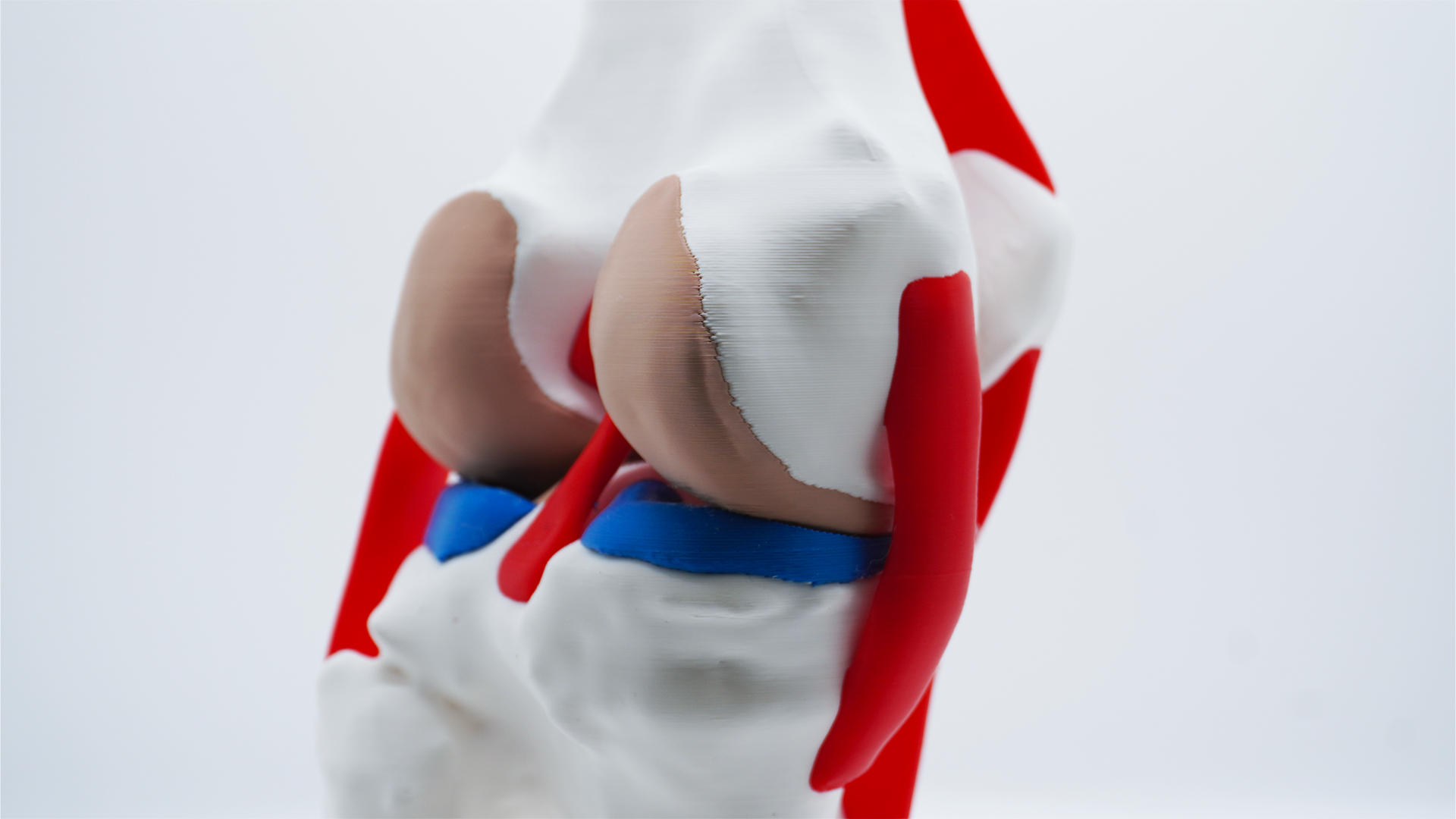
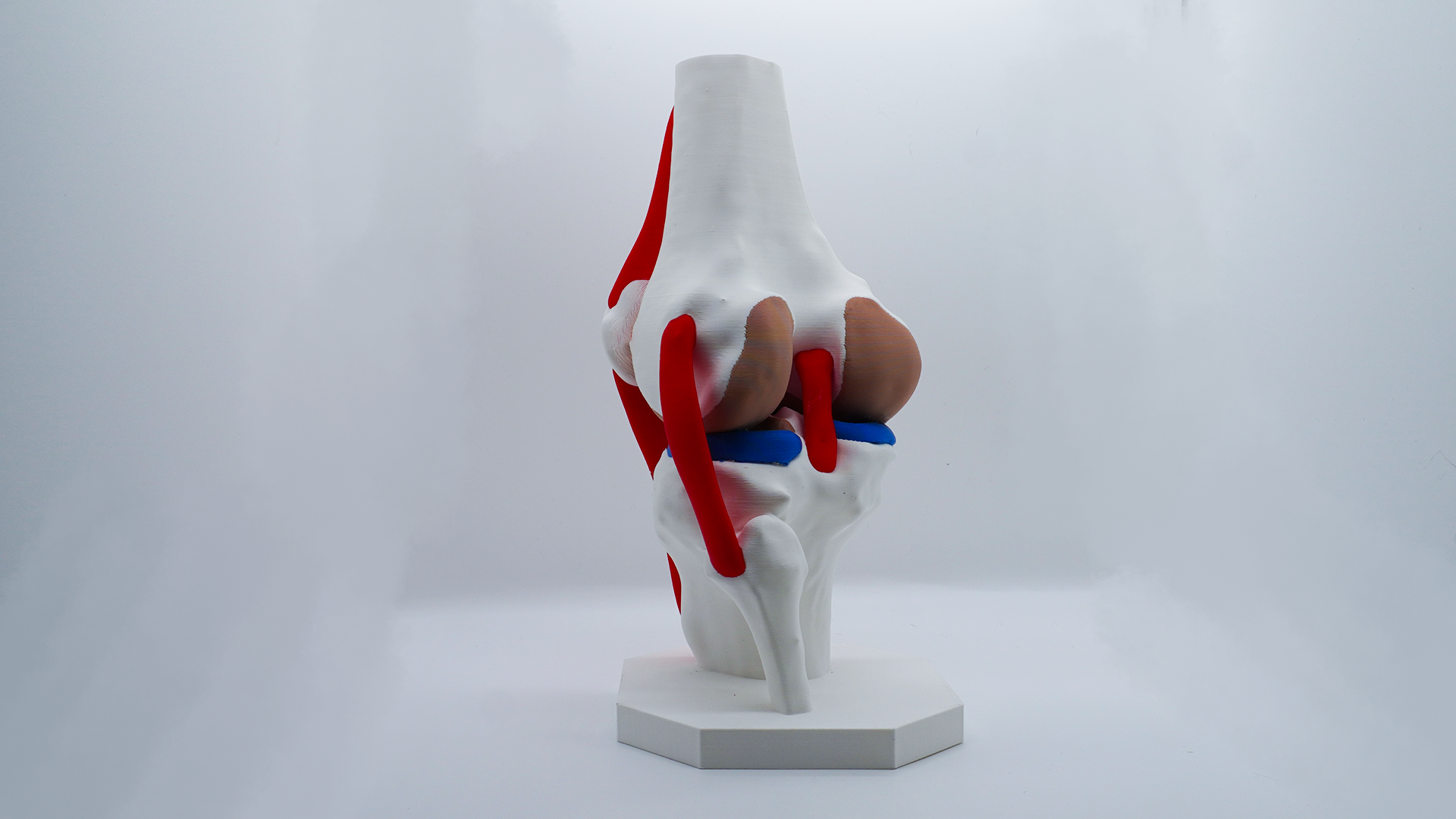
The knee joint model adds another educational angle to the display.
Unlike a simple decorative object, an anatomical joint helps people understand how different structures interact in three dimensions. The knee is especially interesting because it combines bones, contact surfaces, and joint geometry in a compact area.
This type of model can be useful for explaining anatomy, movement, injuries, rehabilitation concepts, or product demonstrations related to orthopedics, sports, health, and training.
A multi-color DNA model for scientific learning
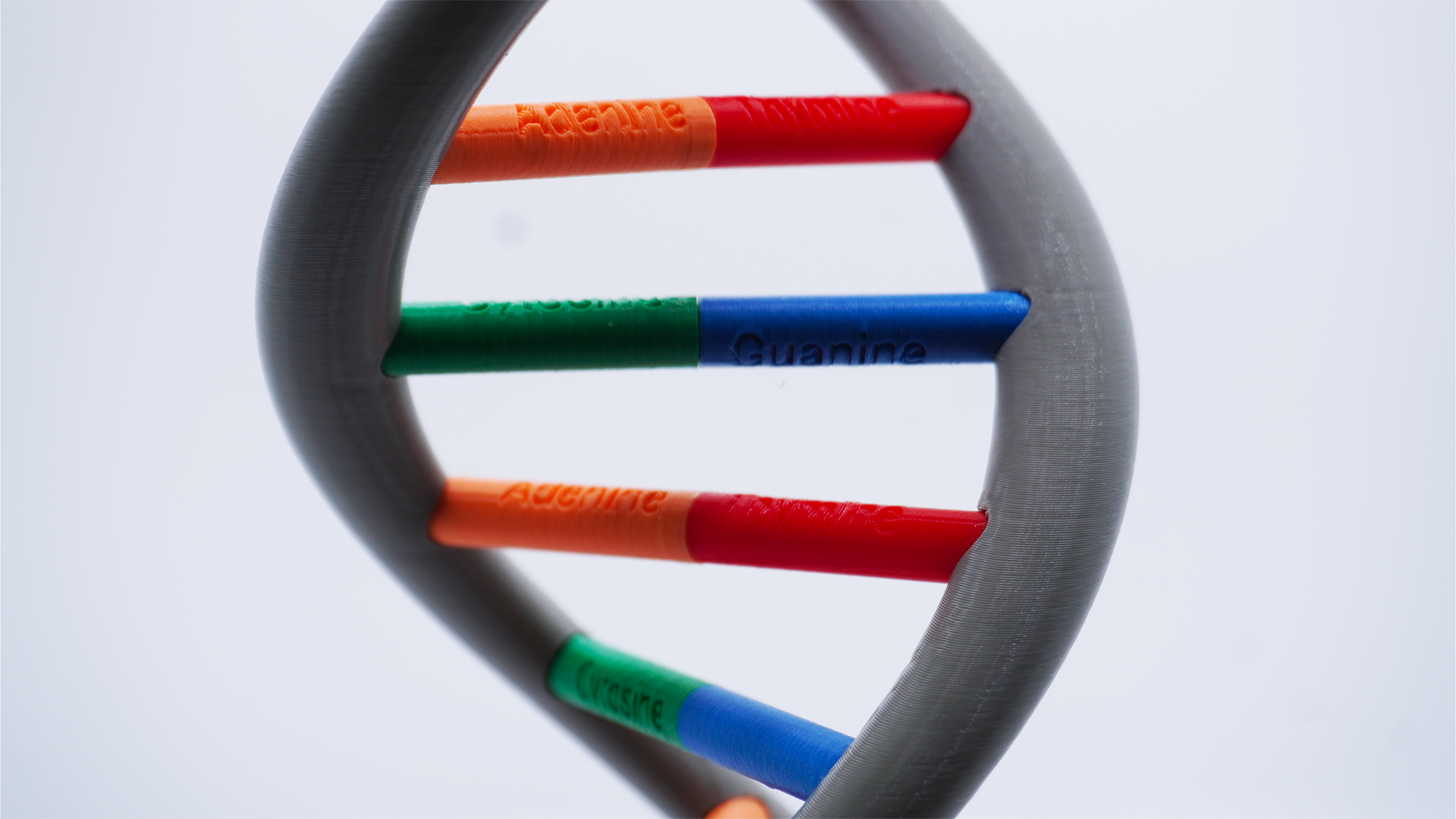
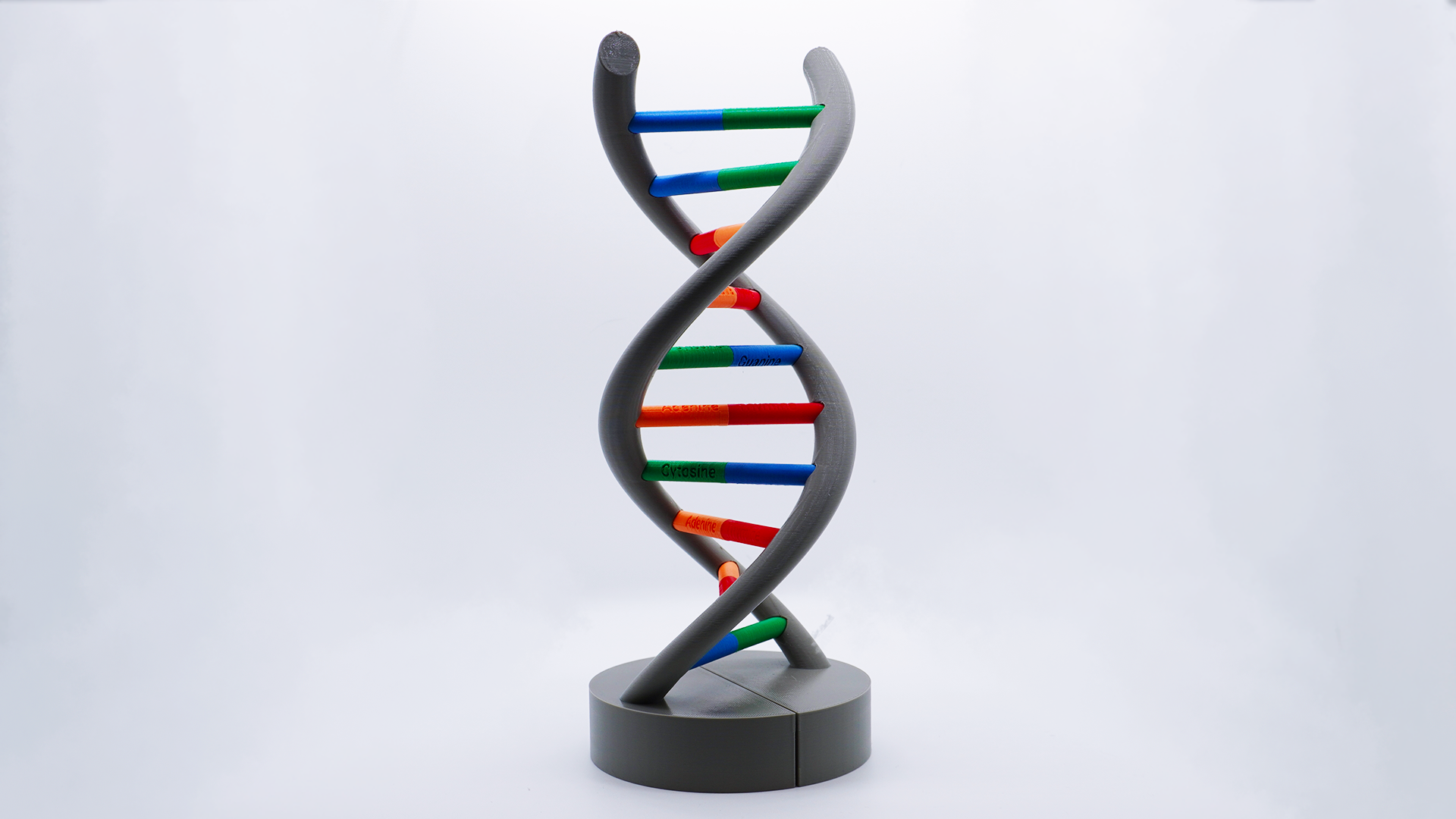
he DNA model brings a more molecular and educational dimension to the showcase.
Its multi-color design makes the double helix structure easier to understand visually, while the friction-fit assembly shows how 3D printing can also create interactive or modular educational objects.
This kind of model is especially useful for classrooms, science workshops, laboratories, and educational displays where abstract concepts need to become more visual and accessible.
Why use 3D printing for anatomical and educational models?
3D printing is particularly useful when a project requires custom scale, specific colors, fast iteration, or a model that is difficult to source commercially.
For educational and professional projects, it offers several advantages:
Custom sizing depending on the display or teaching context
Material and color choices adapted to the subject
Fast production of prototypes and final models
Possibility to create unique or modified versions
Physical objects that improve engagement and understanding
Whether the goal is to explain anatomy, present a concept, create a display piece, or build a hands-on educational tool, 3D printing offers a flexible and accessible production method.
Need custom anatomy or educational 3D printed models?
Do you need anatomical models, educational objects, training supports, or custom display pieces for your school, company, medical training center, or exhibition?
We can help you transform a digital model or a project idea into a physical object using 3D printing.
From material selection to production, scaling, finishing, and assembly, we can support the full process and create models adapted to your educational or professional needs.
Models: